








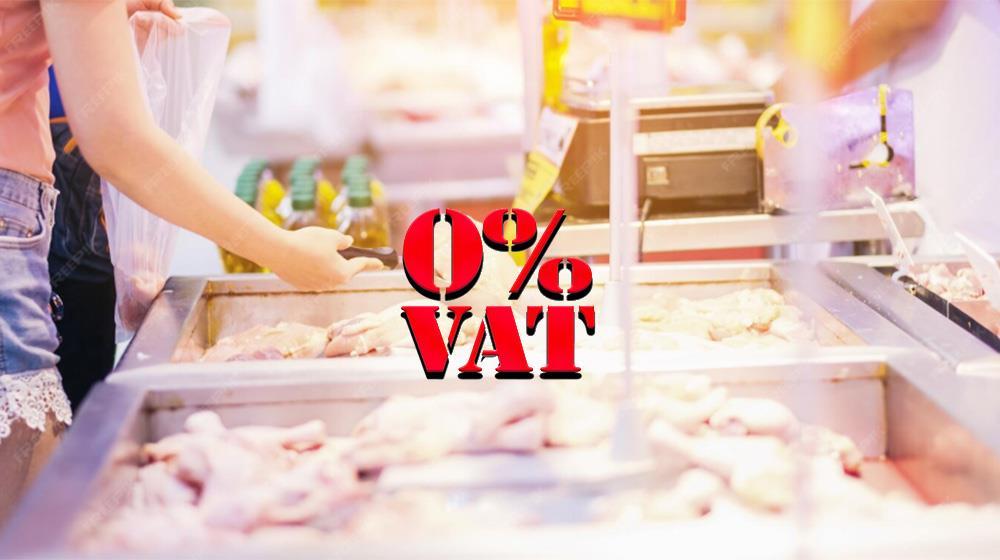
The zero VAT rate on meat and fish comes into effect from Monday, 6 April, as part of the additional support measures announced by the government aimed at further relieving households and supporting the real economy.
These products are added to those already subject to a zero VAT rate, fruits and vegetables, for which zero VAT will apply until the end of 2026.
It is noted that the zero VAT rate on meat and fish will be in effect until 30 September, 2026, based on the decree, which was published in the Official Gazette of the Republic by decision of the Council of Ministers.
The zero rate, as specified by the Tax Department in the decree issued, concerns the following products:
Fresh, chilled or frozen meat
- Meat of bovine animals (beef) (CN codes 0201 and 0202)
- Meat of swine (pork) (CN codes 0203)
- Meat of sheep or goats (CN codes 0204)
- Edible offal of bovine animals, swine, sheep and goats (CN codes ex 0206)
- Edible meat and offal of poultry of 0105 level (CN codes 0207)
- Meat of rabbits or hares and edible offal of rabbits and hares (CN codes ex 0208).
Fish, fresh or chilled or frozen
- Fish (CN codes 0302, 0303 and 0304)
- Cuttlefish, squid and octopus (CN codes 0307).
Which products still have 5% VAT?
It is clarified, however, that meat and fish preparations are still subject to the reduced VAT rate of 5%.
Among them, marinated, smoked, wine-cured meats, the traditional sausage-like meat dish 'sieftalies', burgers, chicken nuggets, sausages, 'lountza' cured ham, roasts, gyros, bully beef, etc., as well as canned fish, smoked fish, marinated, breaded, etc.
Consumer purchasing power strengthened
Supermarkets have welcomed the application of a zero VAT rate on meat, poultry and fish, recognising that any measure that relieves consumers from the increased costs they are already burdened with contributes to preserving purchasing power, which in turn is reflected in the market.
The consumer-friendly adjustment to the pricing policy of supermarkets is expected to relieve the consumer public and strengthen their purchasing power, as it is estimated that approximately 20% of each household's budget in supermarkets concerns meat, fish and poultry.
(Source: InBusinessNews)
