






Issues of energy transition in fisheries and aquaculture, as well as the future of European agriculture and rural communities, were discussed during Agriculture and Fisheries Council (AGRIFISH) in Brussels.
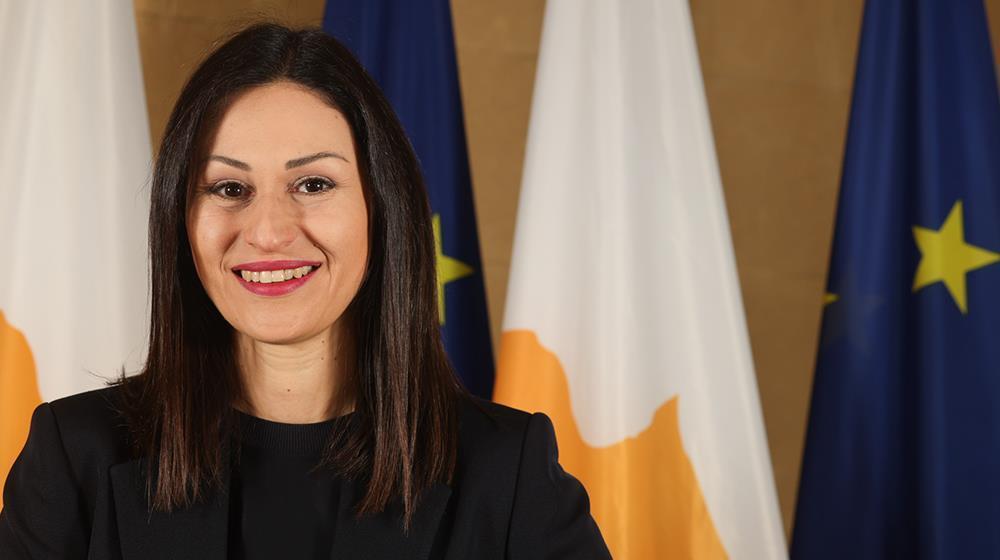
During a press conference following the conclusion of the Council, the Minister of Agriculture, Rural Development and Environment, Dr. Maria Panayiotou, stated that in a period marked by increasing geopolitical uncertainty, the Cyprus Presidency is closely monitoring developments and seeking coordinated European action, aiming for a Union that is united, resilient, and oriented towards the needs of its citizens.
Dr. Panayiotou emphasised that a discussion was held on the future of European fisheries and aquaculture, with a focus on the sector’s energy transition.
She noted that the priority is to ensure income stability for producers, maintain the sustainability of coastal communities, and strengthen the competitiveness of the sector in a challenging international environment.
She pointed out that rising energy costs and geopolitical pressures make the energy transition even more urgent, noting that discussions on long-term measures were reinforced by the Commission’s announcement of short-term support for coastal communities.
Rapid activation
She added that the rapid activation of provisions under the European Maritime, Fisheries and Aquaculture Fund (EMFAF) is expected to support the sector in response to rising fuel prices, safeguarding livelihoods and ensuring the availability of fishery products in EU markets.
At this point, she thanked the Commissioner for Fisheries and Oceans, Costas Kadis, for the swift and timely response.
Dr. Panayiotou stressed that Ministers examined the upcoming Energy Transition Roadmap, highlighting the need to simplify rules and strengthen investments to develop technologies and infrastructure that will enable the use of alternative forms of energy.
She added that this transition must be fair, realistic, and economically viable, in order to enhance the sector’s resilience and competitiveness.
The Minister also noted that an exchange of views took place on the future of the European agri-food sector, one year after the presentation of the Vision for Agriculture and Food. She highlighted that Ministers assessed the progress achieved and discussed whether Europe is truly ready to meet the needs of farmers, rural communities, and citizens.
She explained that the discussion focused on ensuring fair income for farmers, strengthening food security, and building resilience against geopolitical pressures, while also underlining the importance of adequate financing of the Common Agricultural Policy.
She further noted that citizens expect sustainable and affordable food, while farmers call for fair competition conditions, reduced bureaucracy, and stronger reciprocity in trade agreements. She highlighted that protecting EU standards and ensuring a level playing field are essential to supporting European production.
Dr. Panayiotou pointed out that the discussions took place in the context of evolving EU trade relations, including agreements with India, Australia, and Mercosur countries, as well as relations with the United States.
Evolving EU trade relations
She noted that the importance of ensuring that EU trade policy takes into account the specificities of the agricultural sector and includes adequate safeguard measures to protect sensitive sectors was emphasised.
At the same time, she stressed that the Cyprus Presidency will continue to closely monitor these developments and guide the Commission, aiming to protect farmers and rural communities while maintaining Europe’s strong role in global agricultural markets.
In conclusion, the Minister stated that the discussions confirmed that European agricultural policy is not only about farming and food security but also concerns social stability, territorial cohesion, and the EU’s strategic autonomy. She emphasised the need for policies to be supported by adequate funding and to deliver tangible results for the farming community.
Asked about the process for selecting the next Director-General of the United Nations Food and Agriculture Organisation (FAO), Dr. Panayiotou highlighted that the Cyprus Presidency has emphasised the strategic importance of this position.
She noted that the objective remains to form a common EU stance, including the prospect of a single EU candidate.
She mentioned that currently there are three candidates from EU Member States and that the process is still ongoing, stressing the need to maintain momentum in consultations between Member States.
She also emphasised that the Cyprus Presidency continues its contacts with Member States and is ready to facilitate discussions, acting as an honest broker with full transparency.
The Minister underlined that any follow-up actions will fully respect the 2012 Council Guidelines concerning criteria, procedures, and best practices for selecting Executive Heads of United Nations System organisations.
Dr. Panayiotou stated that progress has been made on this issue, but further efforts are required in the coming period to achieve a coordinated European approach.
(Source: CNA)
