








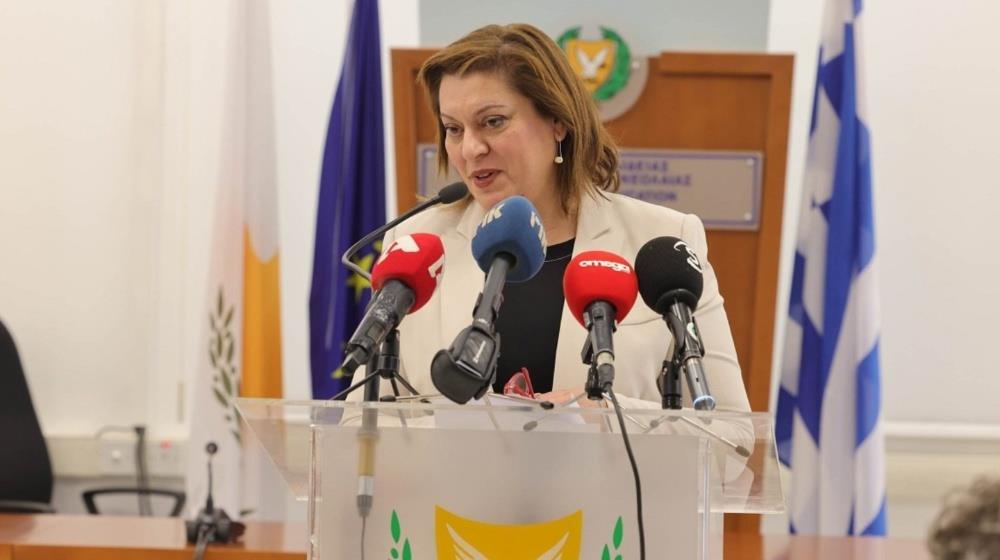
Cyprus is moving forward with a comprehensive reform of its education system aimed at strengthening literacy in its modern, expanded sense, Minister of Education, Sport and Youth Athena Michaelidou has said, noting that school dropout rates in the country remain very low.
Speaking at a press conference marking the opening of the 6th International Educational Conference 'Literacies and Contemporary Society: From Skills to Practices,' held at the Filoxenia Conference Center, Michaelidou outlined the main pillars of the government’s education policy which she connected to the priorities of Cyprus’ Presidency of the Council of the European Union.
The two-day conference is organised by the Cyprus Pedagogical Institute in cooperation with the University of Cyprus and forms part of the Presidency’s programme of events. It aims to serve as a platform for dialogue on building a resilient, inclusive and high-quality European Education Area.
Addressing the conference, Michaelidou stressed that the concept of literacy has moved beyond the narrow confines of reading and writing, acquiring a broader social dimension that includes new skills and competencies essential for active participation in modern social and professional life.
Literacy, she said, constitutes a key individual asset for equal participation in society and the labour market and is closely linked to safeguarding social cohesion and democratic functioning.
“Literacies are a fundamental right of every citizen and a basic obligation of states to promote through their education systems,” she noted, underlining the critical role of education in today’s rapidly changing environment.
Michaelidou described the reform as a coherent and targeted policy already being implemented across all levels of education. Measures include updating curricula, reducing unnecessary material, introducing new subjects and forms of literacy related to core competencies, and strengthening student-centred approaches.
Meeting new demands
At the same time, emphasis is being placed on teacher training and support to enable educators to meet new demands.
“Our goal is not only changes in education, but changes in society and the economy,” she said, adding that the Ministry’s vision is to shape well-rounded individuals capable of contributing creatively to local and global development.
Responding to questions about tangible results, the minister cited data concerning the risk of functional illiteracy among primary school pupils. Each year, students at the end of primary education are assessed in basic skills, mainly in language and mathematics.
In previous years, around 12% of pupils were recorded as being at risk of remaining functionally illiterate in secondary education, she said. Following targeted interventions in recent years, particularly through teacher training programmes, that rate has dropped to between 7% and 8%.
Michaelidou expressed optimism that the percentage will decline further as interventions continue and expand.
As an example of structural changes, she referred to the technical gymnasium, which she said fosters multiple literacies, strengthens critical thinking and promotes links with the labour market by opening pathways to technical professions.
Asked to comment on reports of increasing school departures, the minister said overall student numbers in schools are rising. She clarified that references to around 300 students discontinuing attendance last year did not amount to permanent school abandonment but rather movement to another educational system.
She cited Ukrainian students who had enrolled in Cyprus’ system in recent years and followed online courses but later returned to their home country.
“We are not concerned about school dropout in the sense of permanent abandonment, as the percentages in Cyprus are minimal,” she said, noting that dropout rates in school education have hovered around 2% to 3% in recent years.
She added that at a European level, early school leaving is measured among 18- to 24-year-olds and includes individuals who may have interrupted their education in previous years, including those with a migrant background or who moved for work, meaning the figures do not refer solely to students currently enrolled in national systems.
Michaelidou said hosting the conference within the framework of the EU Presidency highlights Cyprus’ organisational capacity and international standing, reaffirming the country’s active role in shaping dialogue and policies that respond to contemporary educational challenges.
(Source: CNA)
