




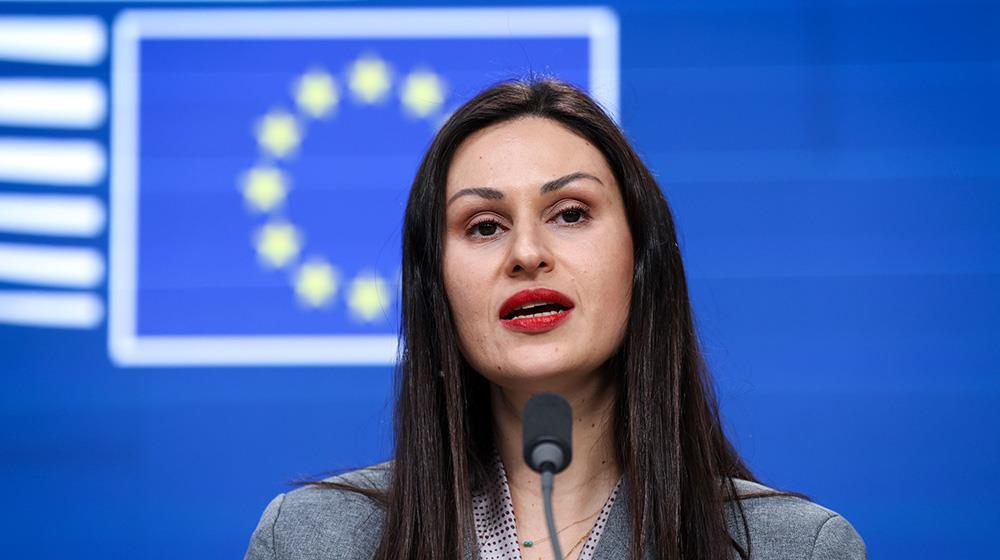
Continued progress was observed at the second Agriculture and Fisheries Council under the Cyprus Presidency, according to a statement by the Minister of Agriculture, Rural Development and Environment, following the conclusion of the Council’s meetings in Brussels.
Referring to the recent crises in Spain, Portugal, and Cyprus, the Minister on 23 February noted that they demonstrate how farmers and rural communities face increasing and interconnected pressures that require coordinated action and solidarity. She stated that, in close cooperation with the Commission, all available resources are being mobilised for an immediate and effective response, and she announced a dedicated discussion at the March Agriculture and Fisheries Council on managing responses to natural disasters and animal diseases, in order to ensure stronger and more timely support for farmers and rural communities.
Regarding the session, Dr. Panayiotou emphasised that discussions focused on strengthening food security with the aim of enhancing the EU’s strategic autonomy, through support for the agricultural sector, ensuring fair protection for farmers in the food supply chain, and reinforcing the EU’s leading role in promoting global food security.
Common Agricultural Policy
The Minister underlined that the proposal for the Common Agricultural Policy (CAP) post-2027 remains the cornerstone of the Cyprus Presidency’s work at the Council. She noted that exchanges of views took place to form a common understanding of how CAP national recommendations can support a coherent, ambitious, and forward-looking agricultural policy post-2027. She expressed confidence that the national recommendations will play a central role in preparing the national and regional partnership plans of member states for the period after 2027, serving as a key guiding mechanism to ensure equal conditions of competition while taking national and regional specificities fully into account.
She added that the recommendations should focus on the main challenges of the CAP, including farm income and competitiveness, generational renewal, climate and environmental performance, resilience to risks and crises, as well as access to knowledge, innovation, and digitalisation, while remaining non-legally binding strategic instruments. She underlined that it is important for the recommendations to provide clear policy guidance without becoming binding, maintaining flexibility, proportionality, and the principle of subsidiarity, while their timely issuance will allow member states to consider them at an early stage of planning.
The Unfair Trading Practices Directive
According to the Minister, the second item on the agenda concerned the Commission’s evaluation report on the Unfair Trading Practices Directive, published on 1 December 2027. She noted that imbalances in bargaining power continue to expose farmers and small suppliers to unfair practices, affecting income stability and trust in commercial relations. She added that strengthening the position of primary producers in the supply chain was deemed essential for securing farm incomes and is fully aligned with the objectives of the CAP.
The Minister stated that the Commission’s report records tangible results from the application of the Directive, such as reducing late payments, improving enforcement, and ensuring a minimum level of protection across all member states. However, she noted that challenges remain and further reflection is needed to ensure the effective use of available tools.
United Nations Food and Agriculture Organization
Dr. Panayiotou also highlighted that the strategic importance of the EU’s leadership role in the United Nations Food and Agriculture Organization (FAO) was discussed, in a period of increased geopolitical tensions, conflicts, and climate shocks that heighten the risk of supply chain disruptions, high food prices, and food insecurity. She stressed the need to strengthen the strategic dimension of EU–FAO cooperation and to promote the Union’s priorities and values in global food security.
In view of the leadership change in mid-2027, she noted that although the EU and its member states are among the main contributors to the FAO, a European has not held the position of Director-General for over 50 years. She emphasised that it is time for the next Director-General to come from the EU and that, with timely preparation and strategic coordination, such a candidacy has the potential to succeed.
The Minister described the day as particularly productive, noting that strategic autonomy is linked to the Union’s ability to feed its citizens, protect farmers and rural and coastal communities, and act confidently on the international stage. She emphasised that the Cyprus Presidency will continue to work intensively, in close cooperation with member states and the Commission, to achieve meaningful progress on all agenda items in the coming months.
(Source: CNA)