








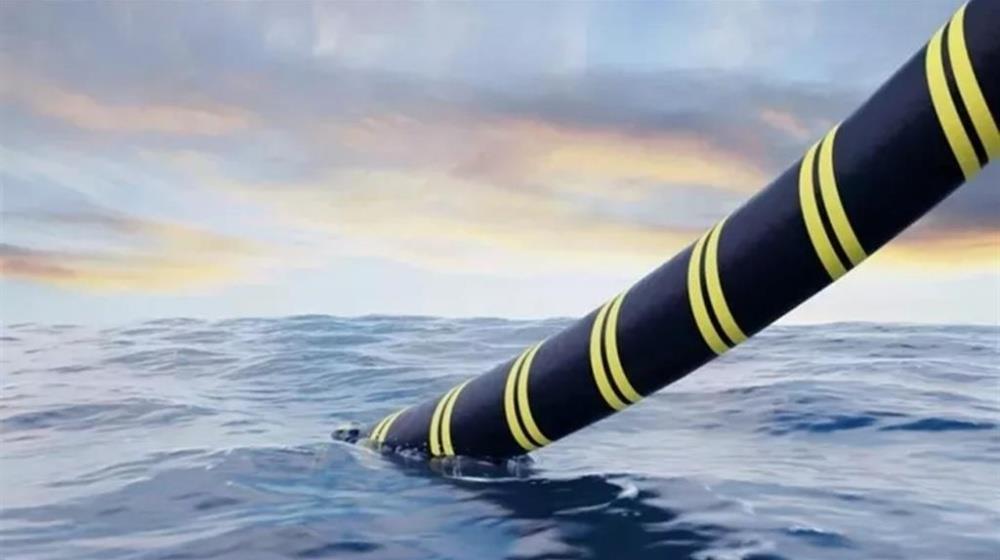
The European Commission is strengthening the security of submarine telecommunications cables by promoting a list of Cable Projects of European Interest (CPEIs), with Cyprus playing a pivotal role both in the Eastern Mediterranean–Black Sea region and in the Trans-Mediterranean corridor.
At the same time, the Commission has amended the Connecting Europe Facility (CEF) Digital Work Programme, allocating a total of €347 million to strategic projects aimed at enhancing the security and resilience of submarine data cable infrastructures.
In particular, under the CPEIs, Cyprus is placed at the heart of the European planning for submarine cable infrastructures both in the Eastern Mediterranean and Black Sea (Priority Area 6) and in the Trans-Mediterranean, Red Sea and Indian Ocean corridor (Priority Area 7).
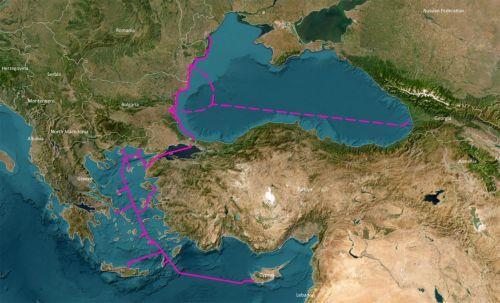
Within Priority Area 6, the EU Expert Group recommends the deployment of a new submarine cable “connecting Cyprus to mainland Greece and Türkiye and extending onward to Bulgaria, Romania and Ukraine through the Black Sea, by deploying a ‘festoon’ network”.
As explained in the report, a “festoon” refers to a type of submarine cable system in which the cable runs along the coastline, connecting multiple landing points in sequence, rather than being routed through terrestrial paths.
At the same time, the report stresses that existing and planned projects “do not fully address the broader need for integrated routes connecting Cyprus, Greece, Türkiye, Bulgaria, Romania, Ukraine and the South Caucasus”.
The need for new cable systems is also linked to the sharp growth in data demand, making “new cable systems relying on EU cyber-security standards” necessary. For the deployment of the two new submarine cables foreseen under Priority Area 6, the report concludes that the estimated cost amounts to €334 million.
With regard to Priority Area 7, the report makes clear that an alternative route towards Asia is required, outside the existing maritime corridors. It highlights that cables in the Red Sea are already heavily utilised and that “deploying additional submarine cables in this area would enhance resilience, especially if they could form a ring around the Arabian Peninsula”.
Specific reference is also made to the limited existing infrastructure in the Mediterranean, noting that “at present, the Jonah cable is the only major system in the Mediterranean region, providing a capacity of 25 Tbit/s and connecting EU Member States in the Mediterranean to Israel”, while this limited infrastructure increases the risk of disruption in the event of cable damage or geopolitical instability.
In this context, the Expert Group recommends a new route explicitly involving Cyprus, through cable 7a, running “from mainland Europe (France, Italy), landing in Croatia, Cyprus, Greece, Albania, Montenegro and Egypt, and crossing to the Arabian Sea”. According to the report, this would provide an alternative route to the Red Sea and the Bab el-Mandeb Strait, connecting Europe with India, Singapore and Malaysia, while avoiding the Strait of Hormuz.
The overall financial scale of Priority Area 7 is also clearly defined, with the estimated cost of deploying additional cable capacity in this area amounting to €1.287 billion.
Finally, the report underlines that, despite the large number of existing and planned projects, the issue of strategic vulnerability remains, as “these initiatives largely follow existing corridors and do not fully mitigate the strategic vulnerability of concentrated traffic through the Bab el-Mandeb Strait and Red Sea routes”.
At a broader level, the CPEI list covers a total of 13 priority areas and foresees three five-year funding phases, up to 2040, for projects aimed at strengthening the overall resilience of submarine cable infrastructures. These projects will be prioritised in upcoming CEF Digital calls for proposals and will inform planning for possible funding under the EU’s next Multiannual Financial Framework.
The new Cable Security Toolbox includes six strategic measures and four technical and support measures to strengthen the security of submarine cable infrastructures. It is based on the EU risk assessment completed in October 2025, which identified threat scenarios, vulnerabilities and dependencies. The toolbox, the risk assessment and the CPEI list were developed by the European Commission and the Member States through a dedicated Submarine Cable Expert Group.
(Source: CNA)
