






Public-Private Partnerships (PPPs) don’t fail because of spreadsheets – they fail because of structure. Legal experts at the Unlocking Investment Through PPPs summit argued that better governance, smarter contracts and a culture of flexibility are what make Public-Private Partnerships work.
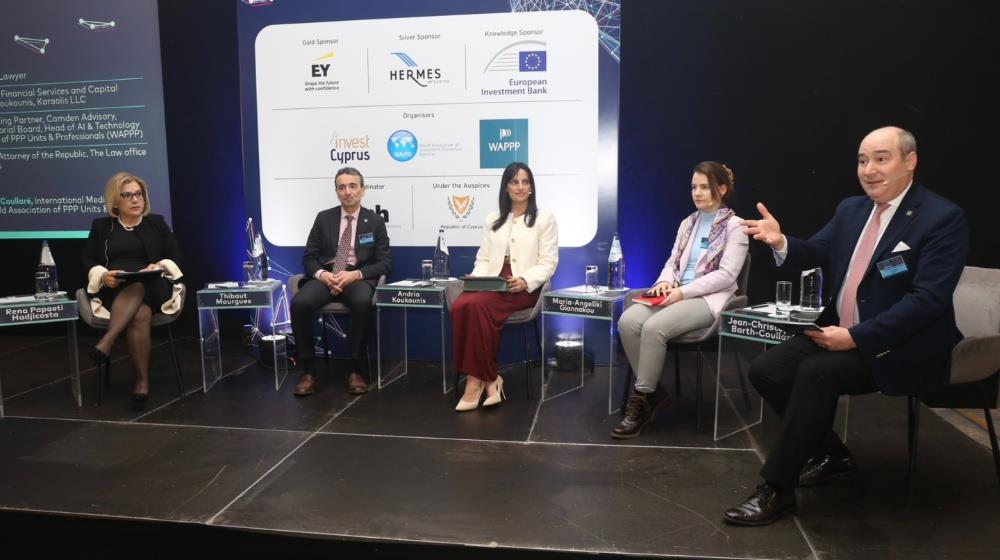
The promise of a Public-Private Partnership often lives or dies, not in the boardroom but in the fine print. As panellists at the Unlocking Investment Through PPPs summit made clear, strong legal frameworks, clear contracts and robust institutions are not simply supporting actors in PPP success: they are the lead story. From international model laws to the Cyprus-specific gaps still holding back scale, the panel tackled what it takes to create the conditions in which PPPs can succeed and what happens when those conditions are missing.
A publication edition containing an overview of what was discussed during the summit is now available online. You can find it here.
“Balancing private sector profit motives with public interest. Critics often claim that PPPs privatise public goods but well-designed frameworks align both parties toward a win-win outcome,” said Thibaut Mourgues, Managing Partner of Camden Advisory and Co-Founder and Head of Editorial Board, Head of AI & Technology chapter at the World Association of PPP Units & Professionals (WAPPP).
The UNCITRAL Blueprint
Maria Angeliki Giannakou, formerly of United Nations Commission on International Trade Law (UNCITRAL), laid out a global best-practice roadmap rooted in the UN body’s Legislative Guide on PPPs. The framework begins with clarity and predictability: legal texts must be accessible, consistent and stable. Frequent amendments and overlapping regulations breed confusion and investor hesitation. Transparency is next. Not only should legal and regulatory decisions be public, but even dispute outcomes affecting public interest should be disclosed where appropriate. This builds confidence in the system. “Public institutions must be capable,” said Giannakou. “Feasibility studies, impact assessments and competition must be built into the planning phase.” She also stressed the importance of standardised templates and early disclosure of draft contracts, to reduce surprises for bidders and minimise delays in award procedures.
Cyprus’ Functional Patchwork
Rena Papaeti Hadjicosta, Attorney of the Republic, gave a candid appraisal of the current setup, noting that Cyprus has no dedicated PPP law. Instead, it relies on a constellation of instruments: The Fiscal Responsibility and Budgetary Framework Law (2014), which acknowledges PPPs as infrastructure tools; and the Concessions Law (2017), which transposes EU Directive 2014/23. Together, they provide a solid – albeit fragmented – foundation. The 2014 law enforces fiscal discipline and planning, while the 2017 law governs long-term concession agreements, ensuring transparency and fair procurement processes. “It’s a comprehensive framework,” said Papaeti Hadjicosta,“but not a standalone one.”
Bridging Institutional Gaps
Andria Koukounis, a Partner at EY Cyprus specialising in financial services and capital markets, explained that, while laws exist, Cyprus lacks a central PPP authority to coordinate between ministries, manage inter-agency dependencies and support project implementation. She pointed to the 2016 PPP Manual, developed with the World Bank, which outlines pre-selection, feasibility analysis and environmental and social impact assessment processes. But the Manual’s use remains uneven across departments. “We need to formalise licensing identification and create mechanisms for inter-agency coordination. Without this, delays in town planning or environmental approvals derail projects,” she said. Referencing UNCITRAL’s model provisions, she called for a central PPP unit tasked with legal alignment, tender preparation and implementation oversight – a recommendation echoed throughout the session.
The Real Balancing Act: Risk, Flexibility and Public Value
Mourgues shifted the focus from structure to substance and stressed the importance of aligning private sector incentives with public outcomes. He advocated for a programmatic approach: long-term PPP pipelines with 5-10 year horizons, assessed on three criteria: Bankability, where return must match risk; the risk profile, which needs to be optimised to attract competition; and readiness, meaning that projects must be permit-ready with clear scope. Value for money, he added, should not just mean financial savings. Economic, environmental and social dimensions must also be factored in, especially for projects serving communities or climate objectives. Mourgues also flagged blended finance as a key tool: combining public and private funds to bridge bankability gaps and ensure affordability. “It’s not about sacrificing today for tomorrow,” he said. “It’s about building projects and finding the common good that benefits both.”
Dispute Avoidance
Giannakou returned to offer strategies from UNCITRAL’s playbook on dispute avoidance. First: early risk identification and contract adaptation clauses. If circumstances change – economic shocks, new legislation – there must be pre-agreed mechanisms for renegotiation or compensation. Second: early warning provisions. These set fixed periods for raising claims, after which rights are forfeited. This encourages early engagement and avoids legal ambushes. Third: step-in rights. These allow the state or lenders to take over operations temporarily to maintain service delivery, protecting public continuity without full contract termination.
Mediation vs. Arbitration
The panellists broadly agreed that arbitration, while final and enforceable, is often too slow and too costly for PPPs. “Arbitration resolves issues, but it doesn’t restore relationships,” said Mourgues. “Mediation does, which is essential for long-term PPPs”
Cyprus’ legal reforms now require mediation attempts before litigation. Papaeti Hadjicosta noted that, while arbitration remains the default in major concession contracts, mediation is gaining traction, especially with the introduction of accredited centres and trained professionals on the island. Andria Koukounis added that legal teams must be involved early, to structure contracts with enough flexibility to accommodate change, minimising the need for litigation down the line.
Flexibility without Fragility
The challenge, said Mourgues, is to balance standardisation and adaptability. Too much rigidity locks contracts into outdated assumptions; too much flexibility invites abuse and endless renegotiation. He cited World Bank data showing that two-thirds of PPP contracts are renegotiated within three years, a statistic that he said “signals poor preparation.” Economic equilibrium clauses are one solution. These allow adjustments when external factors undermine the financial model. But Mourgues warned to use them sparingly – renegotiation should be the exception, not the expectation.
The Bottom Line
The message from the legal panel was unequivocal: project preparation, no matter how technically sound, will fail without the right legal scaffolding. Governments must resist the urge to improvise. They must invest in institutions, templates, training and inter-ministerial cooperation. Contracts must protect the public interest while giving the private sector the clarity it needs to commit capital for decades.
Read more about PPPs in the online edition here.