








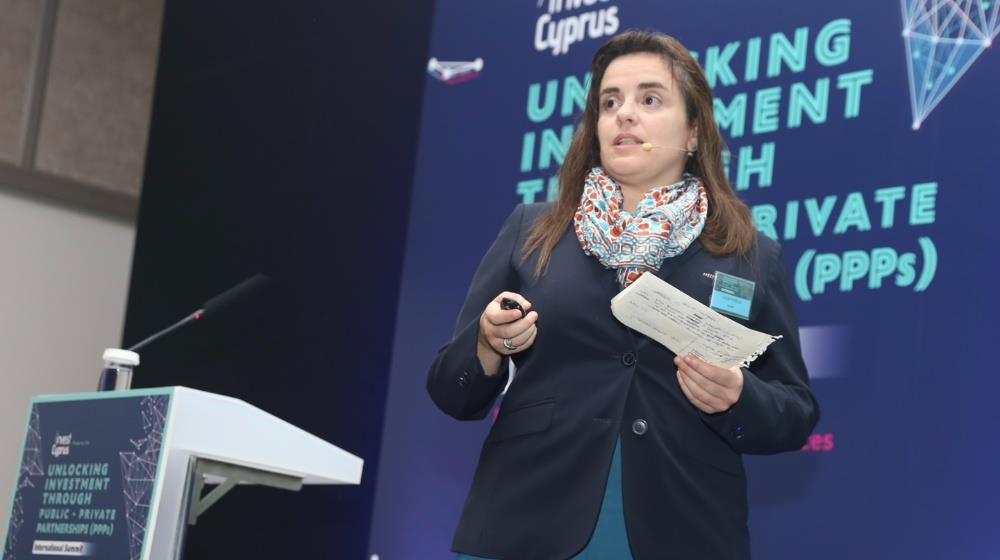
During the Unlocking Investment Through PPPs Summit, Lucia Fuselli, Chair of the Energy Chapter, Co-Chair of the Sustainability and Resilience Chapter at the World Association of PPP (WAPPP), issued a challenge to governments: prepare your projects properly or risk watching them stall on the starting blocks.
A publication edition containing an overview of what was discussed during the summit is now available online. You can find it here.
Fuselli's deep dive into PPP project preparation underscored what seasoned practitioners already know and what newcomers often underestimate: getting from policy aspiration to bankable infrastructure requires disciplined groundwork.
On day 2 of the summit, Lucia Fuselli offered a technical walk-through of what project readiness truly entails. The key building blocks include technical due diligence, economic cost-benefit analysis, legal viability, commercial viability (focused on bankability), value for money (specific to PPPs), fiscal feasibility and affordability. Each of these feeds into a strategic rationale that answers not just the question ‘Can the project be delivered? but ‘Should it? And by whom?’ “Financial non-profitability is not the same as financial analysis or bankability assessment,” she clarified. “Externalities like public health or emissions reduction can justify investment, even where the financial return for the private sector is marginal or negative.”
What makes a project bankable?
Fuselli laid out six pillars for bankability assessment. First, revenue robustness, meaning that projects must be based on well-grounded demand and revenue assumptions. Innovative infrastructure may require more conservative cost projections and buffers. Then, the financial structure – debt-to-equity ratios must reflect project maturity. “The classic 20/80 split may be too aggressive for early-stage or high-risk projects,” she cautioned. Another pillar is counterparty strength, where the financial health of every stakeholder – equity, lenders, sponsors – must be tested. Contractual terms are equally important, as lenders examine step-in rights, debt seniority and termination conditions with scrutiny. A bankability review should also look at risk management. Project risks must be mapped across the lifecycle, with mitigation measures in place for financial, operational, environmental and social factors. Last but not least, financial metrics. Here, Net Present Value (NPV) typically holds more weight than Internal Rate of Return (IRR), though both play a role.
ESG and the compliance imperative
Projects must also pass rigorous environmental and social appraisal. The Environmental and Social Impact Assessment (ESIA) is the cornerstone, often mandated by development banks. But depending on context, lenders may also require stakeholder engagement plans. These feed into an Environmental and Social Management System (ESMS), which governs performance across the project lifecycle. “These studies may not always drive project identification but are crucial for securing finance and ensuring compliance during implementation,” she noted.
Affordability and fiscal exposure
A final dimension of project preparation lies in understanding the project’s fiscal footprint. Governments must weigh both direct liabilities, such as availability payments, and contingent liabilities, including guarantees and compensation clauses “Understanding these costs helps evaluate affordability and potential fiscal exposure,” she stressed. Fuselli’s message was clear: feasibility alone isn’t enough. Bankability is built on rigour, realism and risk allocation. Projects must be crafted with financial and institutional readiness in mind, and tailored to the conditions of their market.
Read more about PPPs in the online edition here.
