






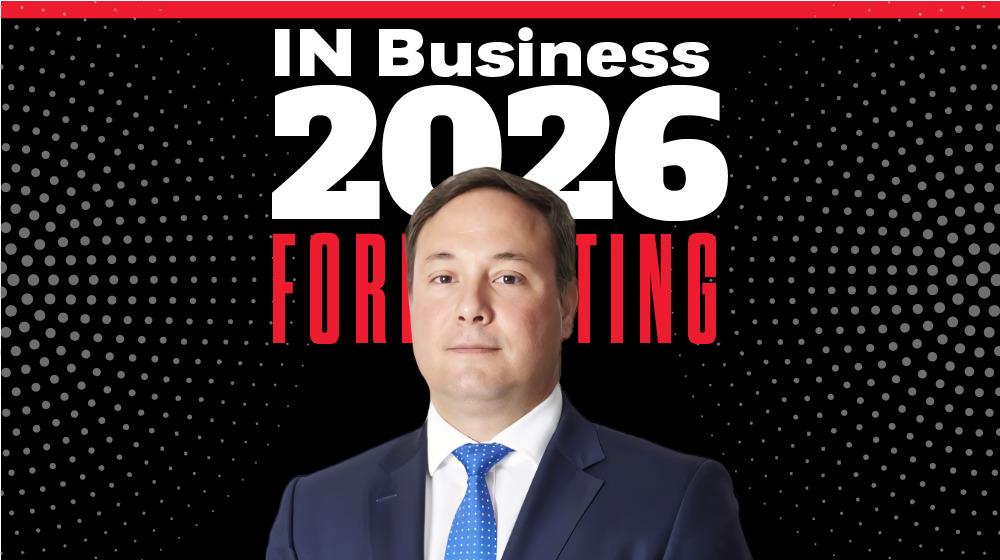
Universal Life's Chief Executive Officer, Evan Gavas, has expressed the certainty that 2026 will be a dynamic year of strengthening Universal Life's presence and image in the Cypriot market, announcing the upgrade of the company's core IT systems.
As he specifically stated in an interview with InBusinessNews in the context of 'IN Business Forecasting 2026', this is one of the largest technology projects to be undertaken by the company in recent years, with Gavas going on to underline that "this investment will allow us to significantly expand our range of products and services and respond even faster to our customers' needs, achieving a significant improvement in time-to-market."
Regarding the trend of acquisitions and mergers, Gavas emphasises that this dynamic is not something new for the insurance sector, noting that "it is expected that such trends will continue to appear, as the industry evolves and adapts to new market demands."
Regarding the most important challenges that the sector is called upon to face, he states that these are related to increased operating costs, the increasingly demanding regulatory framework, and also the relatively small size of the Cypriot market, which makes it difficult to adopt all modern trends at the same pace as we see internationally.
Commenting on the tax reform, Gavas emphasises that if it is accompanied by further digitalisation of the public sector, while maintaining a friendly framework for investment activity, it is not expected to substantially impact the flow of foreign investment to the country.
How do you think the Cypriot economy will perform in the new year and what are its prospects? What do you consider to be the biggest risks and how can they be addressed?
The Cypriot economy appears to be maintaining its resilience, with a moderate but positive growth trajectory and prospects that remain promising, despite the unstable international environment.
The services, technology and investment sectors continue to strengthen, while employment remains at high levels, supporting consumption and overall economic activity.
The main risks today concern international geopolitical uncertainties, which continue to create uncertainty in the markets, as well as the growing climate and environmental risks that are increasingly affecting the real economy.
At the same time, the need for deeper reforms in the public sector remains critical for Cyprus to strengthen its competitiveness and support the sustainable development of businesses.
Addressing these risks requires continuing reforms, promoting innovation, strengthening competitiveness and investing in human capital.
With stable policies and a strategic focus on sustainable development, the Cypriot economy can continue to perform positively in 2026.
How do you estimate that your company's sector of activity will develop in 2026, what are the biggest trends/changes you expect to occur and what are the most significant challenges?
The insurance sector will continue to evolve dynamically, influenced by factors such as the following:
- digital transformation and the use of technologies such as artificial intelligence,
- the increased needs of customers for personalised life and health solutions, and
- regulatory requirements that enhance transparency and accountability.
In life insurance, we expect continued increased demand for products that combine savings and investment, particularly due to households' need for longer-term financial planning.
In health, the need for broader, more flexible coverage and immediate access to high-quality medical services, both in Cyprus and internationally, will remain in focus.
The most significant challenges are related to increased operating costs, the increasingly demanding regulatory framework, but also the relatively small size of the Cypriot market, which makes it difficult to adopt all modern trends at the same pace as we see internationally.
Nevertheless, companies that continue to invest in technology, innovation and human resources will be the ones that will shape the future of the industry.
A strong trend that seems to be taking hold in Cypriot business is that of acquisitions and mergers. Will we see it strongly in your sector as well?
The trend of acquisitions and mergers is an international phenomenon and is mainly due to the need of organisations to strengthen their competitive position, utilise modern technologies and develop new capabilities faster than organic growth alone would allow.
It is, therefore, an alternative way of development, used strategically in many industries internationally.
In the insurance sector in particular, this dynamic is not new. We are seeing strategic partnerships and synergies that aim to improve efficiency, expand expertise, reduce operating costs and increase the value offered to customers.
It is expected that such trends will continue to emerge, as the industry evolves and adapts to new market demands.
What can we expect in terms of your organisation's plans and development and expansion strategy in 2026? What moves do you intend to make in this direction?
2026 will be a year of continued implementation of Universal Life's strategy, focusing on customer-centricity, digital transformation and enhancing the overall experience of our customers.
In this context, we are proceeding with the upgrade of our core IT systems, one of the largest technology projects we have undertaken in recent years.
This investment will allow us to significantly expand our range of products and services and respond even faster to our customers' needs, achieving a significant improvement in time-to-market.
Finally, with our new corporate identity, 2026 will be a dynamic year of strengthening Universal Life's presence and image in the Cypriot market.
The new year calls for the implementation of the tax reform, which takes place 22 years after the previous tax reform. How do you estimate that it will affect the Cypriot economy, businesses, and the attraction of foreign investments?
The tax reform is an important step that can have a positive impact on the competitiveness of the Cypriot economy. With simpler procedures, greater transparency and a framework that reflects modern economic conditions, we expect it to support business activity and enhance Cyprus's attractiveness as a service and investment center.
The ultimate impact of the tax reform will depend on how it is implemented, but it has the potential to enhance business stability and planning, creating a more competitive and transparent environment for investment.
For the insurance sector in particular, a possible reduction in the tax burden on households, particularly in the middle-income strata, could increase the ability of families to invest in life and health insurance products, enhancing their long-term financial security.
At the business level, the proposal to increase corporate tax to 15%, in the context of alignment with international practices, could potentially impact our country's competitiveness in attracting foreign investment.
However, the overall tax burden in Cyprus remains lower than in many European economies, while the tax reform includes compensatory measures, such as the abolition of the imputed profit distribution regime and the significant reduction of the Extraordinary Defense Contribution on dividends and interest from 17% to 5%, which is expected to limit the impact of the increase in the corporate tax rate.
At the same time, Cyprus continues to have significant non-tax advantages: economic and political stability, high-quality professional services, a modern regulatory framework, a well-trained workforce and particularly good living conditions. All of these enhance its overall attractiveness.
Consequently, as long as the tax reform is accompanied by further digitalization of the public sector and the maintenance of a friendly framework for investment activity, it is not expected to substantially affect the flow of foreign investment to the country.
(Source: InBusinessNews)