







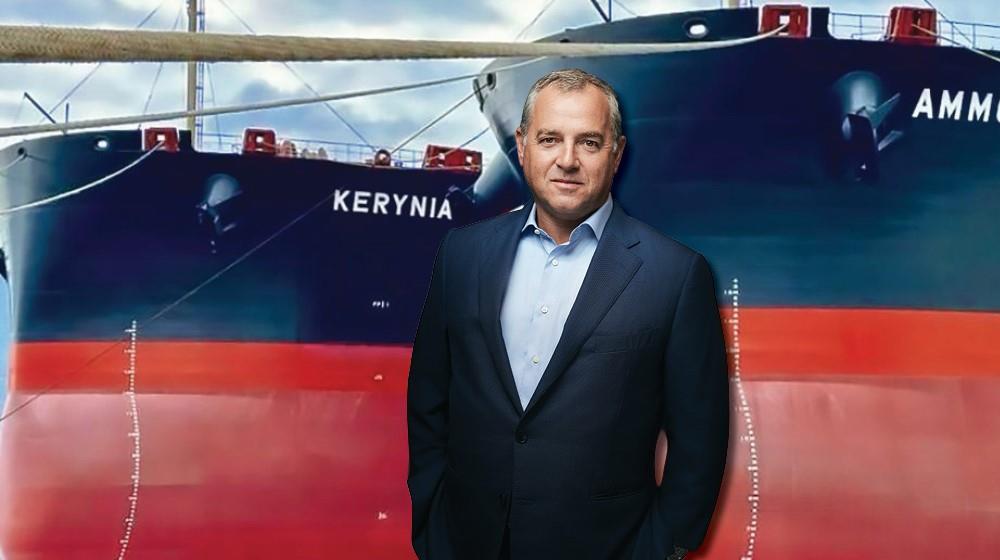
As global shipping faces new challenges – from decarbonisation mandates to digital disruption – Safe Bulkers CEO Polys V. Hajioannou explains how the company has succeeded in maintaining a steady course by investing in people, innovation and a greener future for maritime trade.
Safe Bulkers has navigated multiple shipping cycles over the years. How do you strike a balance between managing short-term volatility and maintaining a long-term vision for sustainable, strategic growth?
Safe Bulkers was built to perform across market cycles, combining operational efficiency with strategic foresight to create long-term, sustainable value. The dry bulk sector is inherently cyclical, influenced by global economic trends, geopolitics and shifts in supply and demand. To manage this volatility, we follow a disciplined, flexible chartering strategy – balancing vessels between period time charters for steady cash flow and spot charters for market responsiveness. Financially, we maintain low leverage and strong liquidity, giving us the flexibility to renew our fleet, invest in innovation and deliver shareholder returns even during challenging conditions. Our focus on sustainability and capital discipline underpins every decision: we continue to upgrade to modern, fuel-efficient vessels and adopt advanced environmental technologies to improve performance and reduce our footprint. Our governance model and risk management framework allow us to respond swiftly to global disruptions while remaining aligned with our strategic goals. With a Board composed of experienced independent directors and family representatives, we maintain a balanced perspective that supports long-term growth and stays true to the core values that define who we are.
The International Maritime Organization (IMO) has agreed to delay the planned adoption of the Net-Zero Framework for one year. What are the possible consequences of the delay? Will it slow down decarbonisation efforts, give unfair advantage to non-compliant operators and/or create regulatory uncertainty?
The Net-Zero Framework, as currently formulated, poses a serious threat to European shipping and energy security. It places the greatest burden on small and medium-sized shipping companies, the backbone of our industry, without effectively reducing emissions. It adds billions in additional costs, which are ultimately passed on to consumers, driving inflation and undermining financial stability across the EU. For this reason, the Cyprus Union of Shipowners (CUS) had issued an urgent appeal to reject the framework, in order to allow time for genuine consensus-building and the development of a more balanced, effective policy. We welcome the recent decision to postpone the vote – it represents a constructive step toward dialogue and a thoughtful reassessment of the framework, based on the operational realities of the shipping industry, especially tramp shipping. Moreover, the fact that several major maritime nations either voted in favour of postponement or abstained from the vote underscores the need for deeper reflection and coordinated international action. A policy of such global impact must be shaped through inclusive dialogue and a pragmatic understanding of the industry’s complexities.
How can the IMO ensure that ambitious emission reduction targets are met without disproportionately burdening small and medium-sized shipowners?
Decarbonisation is vital for the industry’s long-term sustainability. However, it brings significant challenges, especially for small and medium-sized shipping companies. The cost of upgrading vessels and adopting greener technologies is high and not every operator has the resources to keep up. To ensure that climate goals are met without disproportionately impacting these companies, the IMO must adopt a balanced approach. This includes flexible rules that scale with company size, financial support to help fund the necessary upgrades, and inclusive policymaking that gives smaller players a voice. Everyone in the industry has a role to play. If shipowners, regulators and charterers work together, challenges can be transformed into opportunities. With smart regulation, innovation, adaptive policy frameworks and creative financing mechanisms, the industry can unlock new value and drive sustainable growth.
Autonomous and semi-autonomous vessel operations are being explored for the dry bulk sector, driven by potential benefits like reduced operating costs, improved safety, and a response to crew shortages. Do you see automation as a realistic path toward greater efficiency in bulk shipping? Which technologies excite you most when it comes to future-proofing your fleet?
At Safe Bulkers, we see automation and digitalisation as key drivers of long-term efficiency and resilience in bulk shipping. While autonomous operations offer exciting potential, success depends on balancing technology with human expertise. The human element remains vital in maritime operations, and any shift toward automation must be carefully managed with robust risk mitigation strategies. We are investing in advanced digital tools, including real-time data collection and analytics systems, to enhance decision-making and optimise performance. Cybersecurity is equally critical – our onboard and onshore control systems ensure operational safety, supported by continuous crew and staff training to identify and mitigate risks. Environmentally, Safe Bulkers is committed to maintaining one of the most efficient fleets in the dry bulk sector. We are executing a dual strategy: renewing our fleet with 18 next-generation “green” vessels and upgrading existing ships with eco-efficient technologies. Over the past three years, we have sold 16 older vessels, replaced nine with newer ships, and upgraded 25 existing ones. Twelve new energy-efficient vessels have already been delivered, with six more under construction – including two dual-fuel Kamsarmax ships capable of running on methanol and conventional fuel – scheduled for delivery by early 2027.
Crew welfare has become a critical topic when it comes to the maritime industry. How does Safe Bulkers address the human side of the business at sea and onshore?
Our seafarers are the backbone of our operations and the force that keeps our industry in motion. At Safe Bulkers, their safety and well-being are our highest priority and we do our best to ensure that we operate our vessels to the highest safety and quality standards, in compliance with the Maritime Labour Convention (MLC) and all relevant regulatory requirements, industry codes and standards. In line with this commitment, our company has implemented a strict policy to refrain from trading in high-risk areas. We have ceased passage through the Black Sea since 2022 and through the Red Sea since 2023. These decisions were made to safeguard the lives of our crew and reflect our unwavering dedication to their protection. Through our Integrated Management System, we prioritise the welfare of our seafarers by strengthening both their technical capabilities and soft skills. We provide structured training, hands-on mentorship, digital learning modules and onboard drills, creating a strong support system that promotes high standards in every aspect of crew safety, development and welfare. As industry expectations evolve, we remain committed to compliance and transparency. Since June 2024, we have implemented the DryBMS management system, further enhancing our operational efficiency and data-driven oversight. We closely monitor and assess training outcomes to continuously improve our seafarers’ qualifications and certification standards. We also have vigorous vetting procedures in place, both internally and through qualified third parties, to ensure the highest standards of crew performance and vessel operation. But what makes the greatest impact is open communication with our seafarers. By maintaining continuous dialogue, we create a culture of trust that boosts morale and strengthens relationships both onboard and with our shore-based teams.
How is Safe Bulkers preparing to navigate the next decade? What will be its main strategic priorities?
Safe Bulkers is positioning itself for the next decade with a clear focus on sustainable growth, fleet optimisation and digital innovation. Our robust governance model and proactive risk management framework allow us to respond swiftly to geopolitical shifts, rising protectionism and evolving market dynamics. As we continue to grow, we are confident in the long-term prospects of our company and our stock performance on the New York Stock Exchange (NYSE). Safe Bulkers stands on solid foundations, which combine an experienced team of people, a modern fleet of high specifications, long-lasting world-class partnerships and a solid corporate strategy, on which we can build further and evolve, capitalising on new opportunities and delivering profitability even amidst volatile markets. Financially, we operate from a position of stability, supported by low leverage and strong liquidity. This allows us to allocate free cash flows between reinvestment in our fleet while delivering consistent returns to our shareholders. Our approach ensures that we are well-prepared to navigate uncertainty, address emerging challenges and capitalise on future growth opportunities.
This article was published in the November issue of GOLD magazine. Click here to view it.
