







As the European Union prepares to revise its tobacco and nicotine legislation, international experts are calling for a regulatory approach grounded in scientific evidence, warning that overly restrictive measures could undermine public health objectives and fuel illicit trade.
The concerns were raised during a webinar organised by SCOHRE on 19 November, against the backdrop of a reported negative opinion by the European Commission’s Regulatory Scrutiny Board (RSB) on the draft impact assessment for the planned revisions of the Tobacco Products Directive (TPD3) and Tobacco Advertising Directive (TAD).
With approximately 24% of Europeans still smoking and an estimated 700,000 smoking-related deaths annually across the EU, speakers stressed the importance of policies that support smoking prevention and cessation while recognising differences in risk between tobacco and nicotine products.
Clive Bates, Director of Counterfactual Consulting Ltd and former Director of Action on Smoking and Health (ASH) UK, warned that measures being considered under TPD3 could restrict access to potentially lower-risk alternatives to combustible cigarettes. These include stricter nicotine limits, flavour restrictions, bans on certain products and additional market authorisation requirements. Bates argued that disproportionate restrictions could also encourage illicit trade, with consequences for consumers, public revenues and law enforcement. Referring to research and market estimates, he highlighted the scale of illegal tobacco and nicotine markets, noting that approximately €13 billion in public revenue is estimated to be lost annually to illicit tobacco trade in the EU.
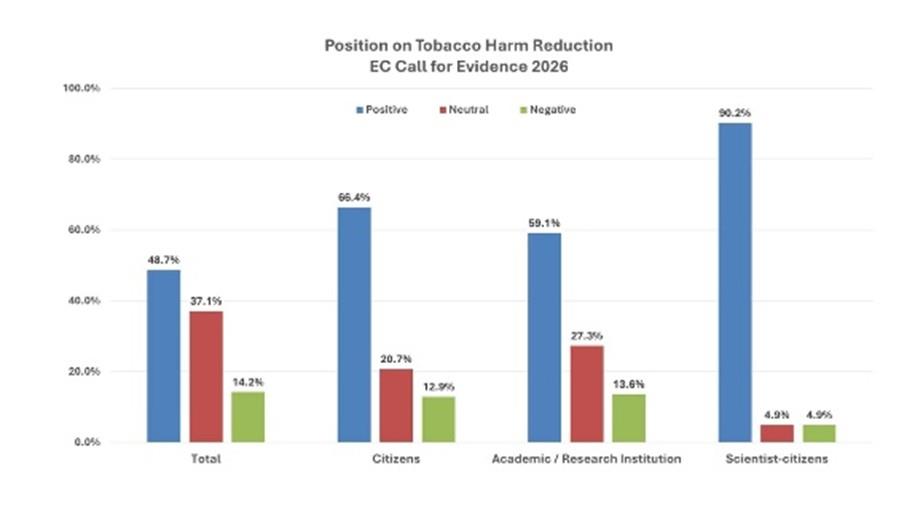
Cumulative retail sales volume for each level of nicotine content or less - sales data for Haypp Group, the largest online pouch retailer.
Dr Konstantinos Farsalinos, Senior Researcher at the University of Patras and the University of West Attica, who moderated the discussion, questioned whether current regulatory approaches adequately reflect the available scientific evidence. He referred to findings from Cochrane systematic reviews supporting the effectiveness of nicotine-containing e-cigarettes as smoking cessation aids and warned against policies that fail to distinguish between combustible and non-combustible products.
Drawing on Australia’s experience, Farsalinos also highlighted the potential unintended consequences of restrictive regulation, citing official data presented during the webinar indicating a substantial expansion of illicit tobacco and vaping markets.
Professor David Sweanor of the University of Ottawa pointed to Sweden as an example of how different patterns of nicotine consumption can coexist with comparatively low smoking-related health risks. He emphasised the importance of distinguishing between the risks associated with nicotine use and those arising from tobacco combustion.
Dr Stelios Kympouropoulos, psychiatrist and former Member of the European Parliament, called for greater rigour in the evaluation of scientific evidence. He stressed that regulatory assessments should consider different population groups, distinguishing between adult smokers seeking alternatives and people who have never smoked.
The discussions also addressed the implications of the RSB’s negative opinion for the EU legislative timetable. While the timing of the Commission’s proposals remains uncertain, further debate over the regulatory framework is expected in 2027.
Concluding the webinar, speakers called for meaningful scientific scrutiny, public consultation and proportionate regulation that protects young people and non-smokers while supporting efforts to reduce smoking-related harm.