


The Cyprus Institute of Directors & Corporate Governance (CyIoDCG) was launched this year with a mission to bolster directorship and good governance.
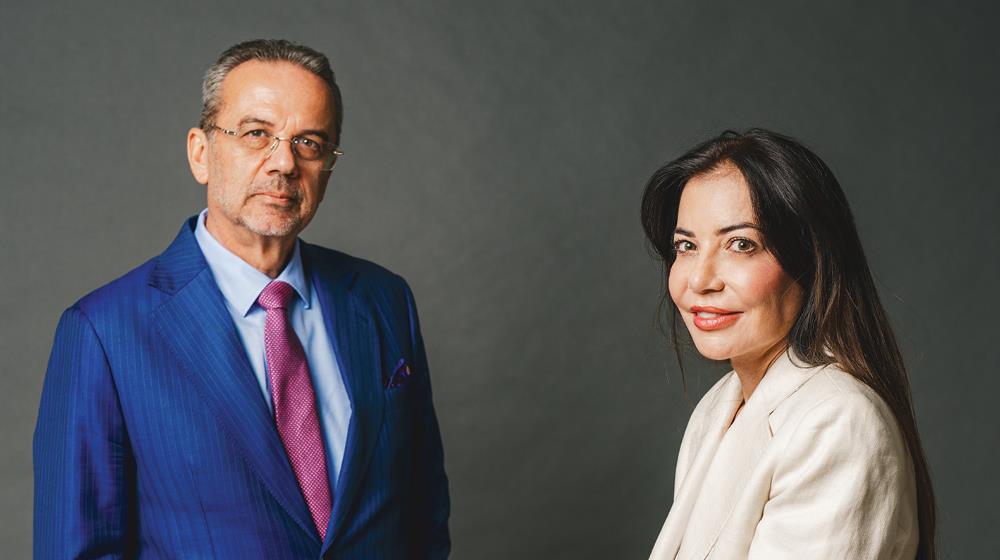
Kyriacos Kokkinos (Chair) and Demetra Kalogerou (Vice-Chair) have extensive first-hand experience of policymaking and regulation – Kokkinos served as Deputy Minister for Research, Innovation and Digital Policy, while Kalogerou is a former Chair of the Cyprus Securities and Exchange Commission (CySEC). Here, they explain the importance of good governance and its practical implications for the Cypriot economy.
Tell us about the Cyprus Institute of Directors & Corporate Governance (CyIoDCG).
Demetra Kalogerou: CyIoDCG is a newly established, independent non-profit professional association, bringing together Board Directors and senior executives from across the Cypriot business community. Our purpose is to promote excellence in directorship and good governance, strengthening Board leadership and promoting integrity, accountability, transparency and ethics in organisational culture. We are a member of the European Confederation of Directors’ Associations (ecoDa), connecting with directors across Europe. The response has been encouraging: over 200 members have already joined and interest in our Certified Director Programme is strong.
What made you realise that there was a need for an association like CyIoDCG? What will show you that it has made a real difference?
Kyriacos Kokkinos: The rationale reflects a broader shift in what is expected of Boards and Directors. Governance today is not simply about compliance. Boards must exercise sound judgement, provide effective oversight, challenge constructively and help organisations navigate technological disruption, geopolitical uncertainty, regulatory complexity and changing stakeholder expectations. Cyprus has a dynamic business environment, driven to a significant extent by SMEs and family-owned businesses, alongside regulated, listed and internationally active organisations. Across that spectrum, there is scope to further strengthen governance practices and the professional development of Directors. CyIoDCG was created to contribute to that. The real measure of success goes beyond membership numbers. We want to see more organisations investing systematically in Board effectiveness, Director development and succession planning, with continuous professional development embedded in their culture.
FDI flows into Cyprus are rising but investors are pricing in governance and transparency risk. Do you believe that local companies will voluntarily prioritise governance to compete?
Demetra Kalogerou: Governance and transparency are increasingly part of how investors assess an organisation. Financial performance remains fundamental but investors also examine how decisions are made, how risks are managed, the quality of oversight and the credibility of the organisation’s leadership. For Cyprus, this is particularly relevant as we seek to strengthen our position as an international business and financial centre and attract high-quality, long-term investment. Strong governance builds confidence and can support access to capital, relationships with international partners and reputation. Companies should therefore not view governance only through the lens of mandatory requirements. Those that strengthen it voluntarily demonstrate maturity and preparedness, and they may be better placed to meet expectations. Good governance cannot eliminate business risk, nor should it – its role is to ensure that risks are understood, decisions are scrutinised and accountability is clear. Therefore, governance is increasingly connected to competitiveness and sustainable value creation.

How would you characterise the average Cypriot boardroom and how can it adapt to meet ongoing and upcoming challenges?
Kyriacos Kokkinos: I would be cautious about defining an “average” Cypriot boardroom because organisations differ considerably in size, ownership, sector, regulatory exposure and governance maturity. There is significant experience and business knowledge around many Board tables here. The question is how we build on it to meet a far more demanding environment of continuous uncertainty, geopolitical risks and unprecedented technological change. Modern directorship requires a wider range of competencies: financial and technological literacy, an understanding of risk, strategic thinking, the confidence to exercise independent judgement and the ability to identify blind spots. Directors also need to understand where governance ends and management begins. In short, they need to reframe and benchmark the role of the “fit & proper” director in terms of integrity, competencies, skills and capabilities.
An effective Board should go beyond receiving information and approving management proposals. It should set direction, oversee strategy and risk, and challenge assumptions constructively. AI, cyber resilience, geopolitical developments, sustainability and regulation are now top agenda items, which demand laser-focused Board selection and onboarding, continuous learning and regular reflection on whether the Board has the right mix of competencies. Succession planning, both for C-level executives and Board Directors, is a key Board responsibility that, unfortunately, does not always receive the necessary attention.
The CSE updated its Corporate Governance Code in 2024, while Cyprus’ biggest banks come under direct ECB supervision. Does this mean that different sectors are held to different standards and, if so, should that gap close?
Demetra Kalogerou: Different sectors face different requirements – and for valid reasons. The level of regulation should reflect factors such as systemic importance, complexity and the risks of the activity, so a systemically important financial institution will face requirements that would not be proportionate for a small privately owned company. However, differentiated regulation does not mean that the principles of good governance are sector-specific. Accountability, effective oversight, risk management, integrity, transparency and competent decision-making are relevant to every organisation. The objective should, therefore, not be identical requirements across the economy or necessarily to eliminate regulatory differences. It should be to strengthen governance practices more broadly, through frameworks that are proportionate and fit for purpose. Ultimately, good governance should be seen as part of any responsible leadership, not something that applies only where a code requires it.
The CEO is often the company’s public face while the Board operates behind the scenes. Is that a sign of a successful Board or does it vary by sector and company?
Kyriacos Kokkinos: Visibility should not be confused with effectiveness. The CEO and executive management are responsible for running the organisation and, in most cases, it is entirely appropriate that the CEO is its principal public face. The Board has a different responsibility. It provides direction and oversight, holds management accountable and safeguards the organisation’s long-term interests. A strong Board does not need to compete with management for visibility; it must ensure that responsibilities are clear and the relationship between Board and management combines support with constructive challenge. The precise balance varies according to the organisation, sector and circumstances. During a crisis, leadership transition or major strategic event, the Chair may appropriately be more visible. What matters is not Board visibility but its independent judgement, oversight effectiveness and capability of adding value.
Women remain significantly underrepresented on the Boards of major Cypriot companies, while Cyprus is moving ahead with legislation to transpose the EU gender-balance rules. Will CyIoDCG take a formal position on this issue and can it help companies prepare?
Demetra Kalogerou: Any formal position on specific legislation would need to be considered and adopted through the Institute’s appropriate governance processes. More broadly, Board composition and diversity are important dimensions of Board effectiveness. An effective Board needs the appropriate combination of competencies, experience, perspectives and independence of thought. Gender diversity forms an important part of that. Organisations should look beyond compliance and consider Board composition strategically: what capabilities and perspectives does it need for its current challenges and future direction? Diversity and merit should not be viewed as competing principles. Well-designed nomination and succession processes should widen the pool of qualified candidates and identify people who can make a meaningful contribution. CyIoDCG can play a constructive role through education, professional development, awareness and the exchange of good governance practices, and it can help Directors and organisations understand what regulatory developments mean in practice.
Family businesses are a major part of Cyprus’ economy. From modernisation to successful succession, what does good governance look like?
Kyriacos Kokkinos: Family businesses and SMEs are fundamental to the Cypriot economy and good governance is particularly valuable because ownership, management and family relationships often overlap, blurring roles and responsibilities. Good governance does not mean importing the structures of a large listed company; it must be proportionate and fit for purpose. What matters is clarity about ownership, management responsibilities, decision-making, accountability and the process through which the next generation becomes involved. Succession planning is especially important. It should be approached as a process: that means preparing early, identifying the capabilities the business will need in its next phase and separating, as far as possible, family considerations from objective decisions.
Independent Directors or advisers can also add value by bringing expertise, challenging assumptions and supporting more structured decision-making. The objective is not to remove the entrepreneurial character that made a family business successful but to create structures that preserve those strengths while enabling it to professionalise, adapt and remain successful across generations.
How does the new Certified Director Programme fit into CyIoDCG’s broader ambitions?
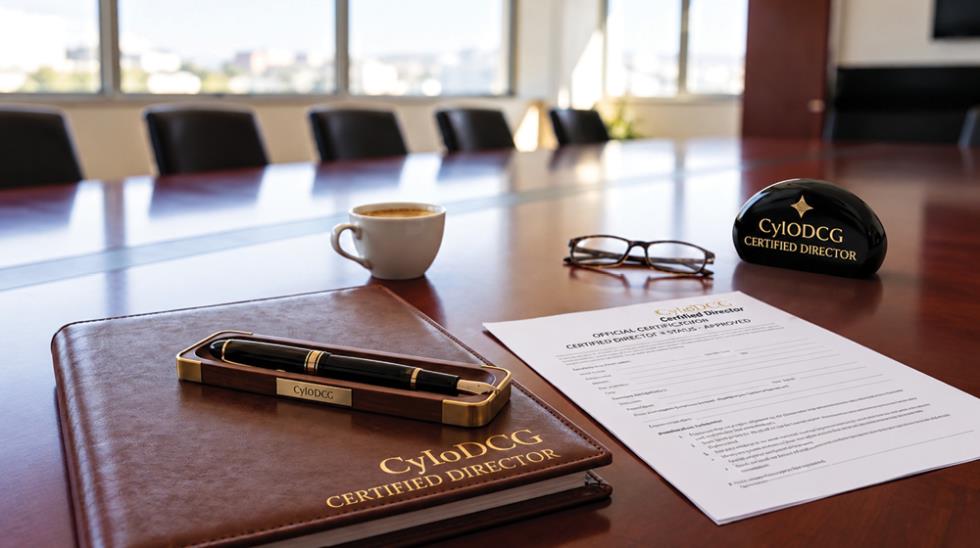
Demetra Kalogerou: The Programme is a practical expression of the Institute’s mission to professionalise directorship and support continuous development at Board level. Experience remains indispensable but the responsibilities of Directors continue to evolve. Structured development provides an opportunity to boost knowledge, test assumptions and strengthen the judgement required around the Board table. It consists of four two-day modules, completed over approximately nine months. Participants undertake preparation and independent study in advance of the modules and complete applied assessment requirements throughout the Programme. The four modules cover corporate governance and Board effectiveness, boardroom dynamics and effective directorship, strategy and risk oversight, as well as company law, Directors’ responsibilities and liabilities. It combines expert knowledge with real-world examples, case studies, practical exercises and Board meeting simulations. The emphasis is not simply on knowing governance rules. Participants are expected to apply governance principles to realistic situations, exercise judgement and engage with the behavioural as well as the technical dimensions of Board leadership. Following successful assessment, participants will obtain Certified Director certification.
Kyriacos Kokkinos: Our Academic Lead and Programme Director is Professor Ludo van der Heyden, INSEAD Chaired Professor Emeritus in Corporate Governance and an IMD Distinguished Scholar. The intention is to combine international standards and expertise with the realities that Directors face in Cyprus. We want to contribute to a culture in which directorship is recognised as a professional responsibility requiring knowledge, judgement, ethical grounding and continuous development. The Programme is therefore not an isolated training initiative. It is part of a wider effort to institutionalise professional directorship. Better prepared Directors can contribute to stronger Boards; stronger Boards can contribute to better organisations; and better-governed organisations ultimately strengthen the credibility and competitiveness of the Cypriot economy.
(Photos by TADOBI)
This interview first appeared in the October edition of GOLD magazine. Click here to view it.