







Bathymetric surveys for the Greece–Cyprus electricity interconnection are planned to resume around 26 October, according to a report in Greece’s Kathimerini daily.
Citing a senior Greek government source, the newspaper says Athens and Paris are close to an understanding that would allow the Great Sea Interconnector (GSI) to move forward.
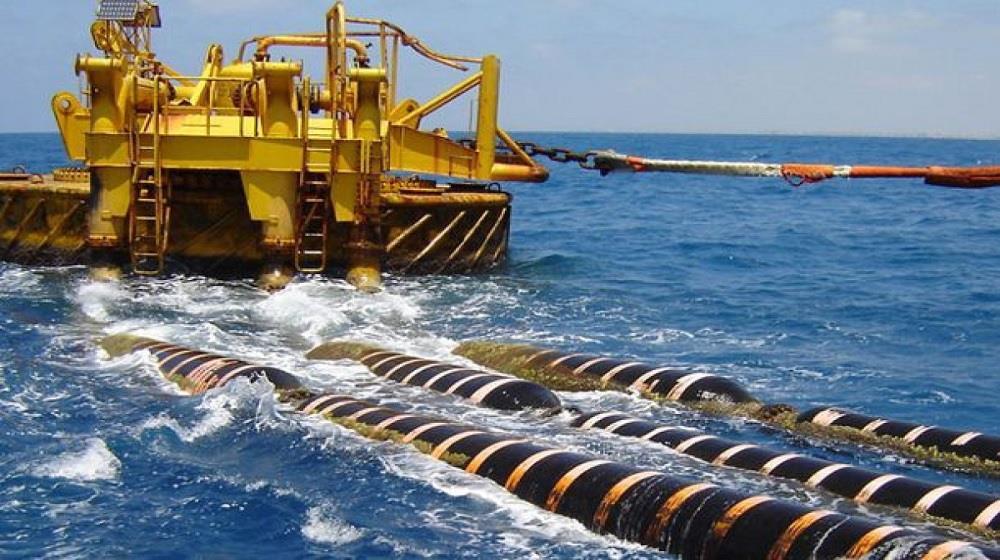
The plan envisages the French company Nexans informing Ankara that it will conduct surveys in international waters east of Kasos and Karpathos. This is the exploratory phase that precedes the laying of the cable.
However, the same report notes a different picture from Turkish sources, which said that as of Friday no mutually acceptable solution had been found to allow the works to proceed without tensions. Among the scenarios described by analysts in the paper is the issuance of separate NAVTEX notices from Heraklion and Antalya, so that each side can maintain its legal positions.
These reports come as Ankara continues to insist on its own licensing requirement. It is recalled that on 1 October, the Turkish Ministry of Defence reiterated that it would not allow the cable-laying to proceed without Turkish permission, claiming that the relevant activities concern the Turkish continental shelf.
Commenting on the statement by a senior government source, a spokesman for NEXANS said the company “categorically denies that it has had, or plans to have, any contact with the Turkish authorities regarding the upcoming seabed surveys for the project”.
He added that contacts on the GSI are being held exclusively with the Greek and Cypriot authorities, and stressed that Nexans “does not take a position on political or geopolitical issues linked to the project”.
It is emphasised that the spokesman’s carefully worded statement reflects the reality that the obvious responsibility for licensing (in industry terminology) lies not with the companies, but with the states involved.
Meridiam: Talks with EIB and National Bank
Meanwhile, the French investment fund Meridiam, which acquired a 66% stake in the Greece-Cyprus electricity interconnection project, appears to be taking a leading role on the financing side.
According to reports by mononews.gr, the French fund is, according to sources, leading discussions with the European Investment Bank and National Bank, in cooperation with ADMIE, to shape the financing structure that will support implementation of the Greece-Cyprus interconnection.
On the table are the terms of bank financing, the amount of equity required, the allocation of financing obligations, and overall the structure on which the project’s financial close will be based.
Discussions with the banks are gaining particular importance, as they will largely determine the final financing architecture of the GSI and the project’s ability to move into full construction development. These contacts are being facilitated by the presence of the strong French fund, which has backed and taken on the challenge of steering the project to successful completion.
In parallel, Meridiam is in contact with Nexans to prepare the seabed surveys, which represent the next critical milestone. The start of the surveys is considered a basic precondition for the project to move from the preparation stage to a real implementation phase.
Meridiam executives Antoine Salzgeber, a member of the investment team, and Martin Schlor, Director for Southeast Europe, have recently been frequently in Athens and are working closely with ADMIE to finalise outstanding technical and financial matters.
With experience in large and complex infrastructure projects, Meridiam has effectively taken responsibility for the capital reinforcement and the technical and financial maturation of the GSI.
Its presence, and the French identity of the project, limit part of the geopolitical risk, which in previous years had been one of the main factors behind delays.
Seabed surveys first, then financial close
The sequence of next steps is now clear. The priority is to start the seabed surveys and restart technical work. Once the project regains operational momentum, the full financing structure will be completed and financial close achieved, expected by the end of 2026.
The initial valuation for the acquisition of the 66% stake by Meridiam was, according to reports, based on the net book value of the special-purpose vehicle. With GSI’s share capital at €4.625 million, 66% corresponds to around €3.05 million.
However, this amount does not represent a valuation of the project’s real economic value. The main financial weight lies in future financing, in the equity and debt needs, and in assuming construction, financing and geopolitical risk.
It is noted that the project is currently in a critical but transitional phase, as the full terms for the level of equity participation, bank involvement, allocation of future financing obligations and the final investment valuation have not yet been finalised.
The start of seabed surveys and the completion of financing agreements are the steps that will bring the operational restart of the Great Sea Interconnector and the closing of the financial deal to finalise Meridiam’s entry into the GSI.
ADMIE remains the implementing entity
Meanwhile, ADMIE is preparing its response to the regulatory authorities in Greece and Cyprus, which on 28 August requested clarifications on the new ownership and institutional framework following Meridiam’s entry.
At the heart of the questions are who now exercises corporate control, who remains the official project promoter, how responsibilities for financing, construction and operation are allocated, and whether the new shareholding structure affects existing licences and regulatory decisions.
The position being formulated is that ADMIE continues to be the implementing entity and technical pillar of the GSI, retaining its crucial role in the construction and future operation of the interconnection. Meridiam, on the other hand, has the leading role on the investment and financing side.
