







Marked on 21 September, Zero Emissions Day draws attention to the impact of energy use and everyday choices on greenhouse gas emissions, at a time when the effects of climate change are increasingly being felt across communities, economies, and ecosystems worldwide.
The occasion also draws attention to practical measures that can reduce environmental impact. These range from changes in transport and energy consumption to the way businesses design, build and operate their facilities.
While individual choices form part of the transition towards more sustainable practices, large organisations can have a significant impact through improvements in energy efficiency, waste and water management, infrastructure and measurable environmental targets.
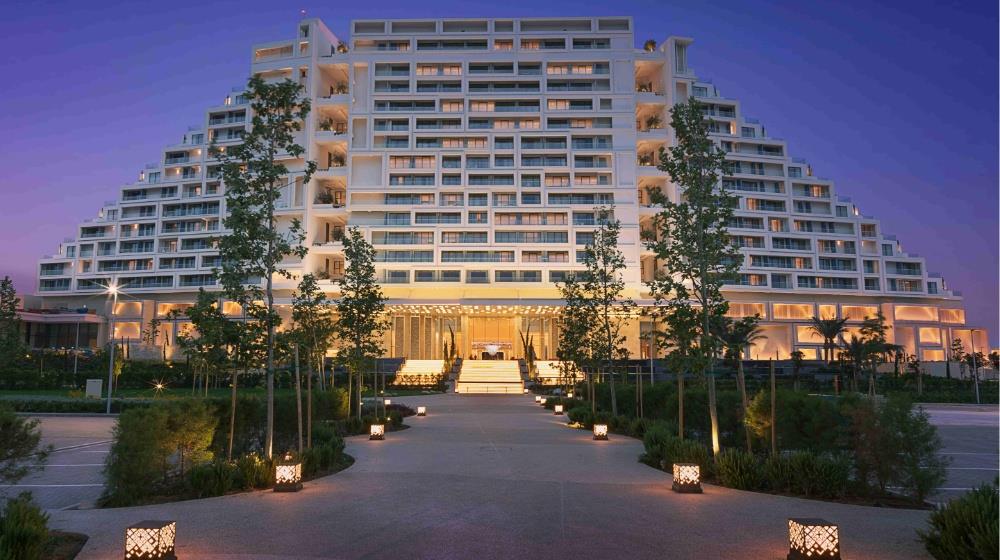
For large-scale developments in particular, the size and complexity of their operations make the management of energy, water, waste and other resources an important part of their environmental approach. In Cyprus, City of Dreams Mediterranean is one such development, having incorporated sustainability considerations into both the design of the integrated resort and its day-to-day operations.
The property became the first development in Cyprus to achieve a BREEAM Excellent rating at the design and construction stage, covering areas such as energy efficiency, sustainable construction, water conservation and waste reduction. City of Dreams Mediterranean also holds ISO 14001 certification, an internationally recognised standard for Environmental Management Systems, that provides a clear framework for reducing waste, improving energy efficiency and ensuring compliance with environmental requirements.
The resort forms part of Melco Resorts & Entertainment’s wider sustainability strategy, “RISE to go Above & Beyond,” which sets environmental targets across the Group’s portfolio. Among these is a commitment to work towards carbon-neutral resorts and zero waste by 2030, alongside initiatives aimed at sustainable sourcing and reducing water consumption.
By 2030, Melco is targeting a 19% reduction in water consumption intensity, while seeking to increase greywater recycling capacity across its properties.
Against 2019 as its baseline, Melco has set a target of reducing non-hazardous waste generation intensity (tonnes per sqm) by 5% by 2030, with a longer-term ambition of achieving a 24% reduction.
As part of the Melco Group, City of Dreams Mediterranean aims to align its sustainability efforts with global targets and evolving environmental priorities.
Energy use is another area where the resort has sought to reduce its environmental impact. City of Dreams Mediterranean has installed 4,200 solar panels, with the capacity to generate up to 1,200 MWh of renewable electricity annually. The installation forms part of the Group’s broader efforts to increase on-site renewable energy generation across its properties.
The measures illustrate how environmental considerations are increasingly being incorporated into both the long-term planning and day-to-day operation of large-scale developments.
Reducing emissions is not dependent on a single initiative, but on changes across energy use, resource management, infrastructure and everyday operations. For large organisations in particular, measurable targets and their implementation can form an important part of that transition.
Stephania Pieri, Director of Property Services at City of Dreams Mediterranean said, “Zero Emissions Day is an important reminder that sustainability is not achieved through a single initiative, but through consistent, practical action over time. At City of Dreams Mediterranean, we continue to look at how we can use energy, water and other resources more efficiently, reduce waste, and minimise the environmental impact of our operations.
But meaningful change is also about people and mindset. Our responsibility is to put practical and reasonable systems in place that make sustainable choices easier for people to understand, follow and improve upon. When good environmental practices become part of the way we work every day, small improvements across a large operation can collectively make a significant difference.
Sustainability is a continuous journey, and our focus is to keep identifying realistic opportunities to improve our performance while encouraging a culture in which everyone understands that they have a part to play.”
