







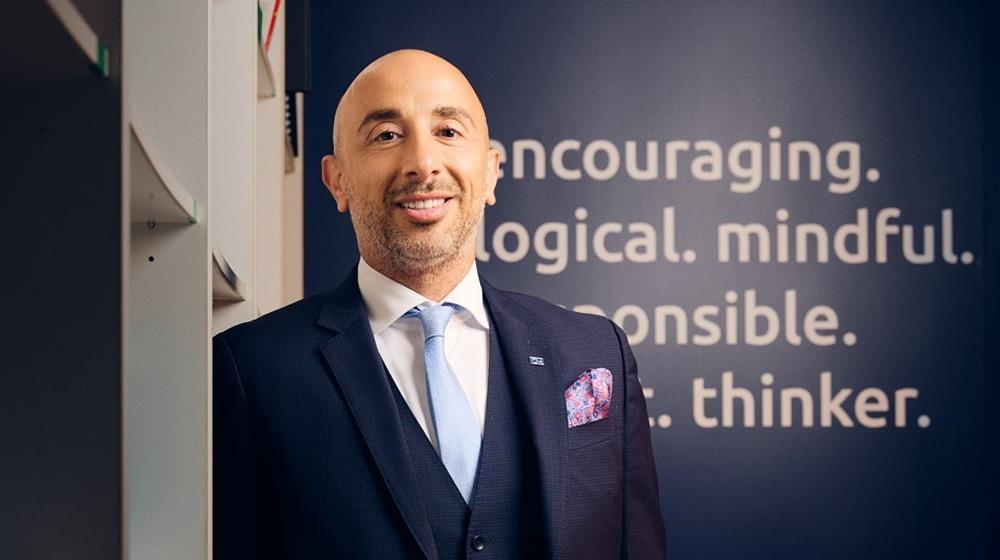
The clear message that no business can now make long-term plans if it is not ready to change its plans according to the next crises, which are more frequent and more complex, is sent by the CEO of CIM-Cyprus Business School, Yangos Hadjiyannis.
At the same time, in an interview with InBusinessNews, he expresses the position that the businesses that will excel in the future are those that adapt fastest and that demonstrate resilience and quick reflexes.
Furthermore, taking stock of the first half of the year, Hadjiyannis states that the Cypriot economy performed exceptionally well, even though the war in Iran has adversely affected tourism with a significant reduction in arrivals.
For him, however, the positive thing is that the situation has largely stabilised and June was expected to end positively with arrivals close to 2025.
According to the CEO of CIM-Cyprus Business School, the war in Iran has once again confirmed the resilience and adaptability of the Cypriot economy, as well as the important geopolitical role that the Republic of Cyprus plays as a pillar of stability in the region.
Regarding the prospects for the second half of the year, he indicates that if and as long as the peace initiative in Iran is not derailed and there is stability, "the second half is expected to be excellent, since tourism is recovering quickly and summer is, as always, the most important period of inflow."
Furthermore, he notes, "positivity is expected to return in terms of consumer psychology, which is extremely important for domestic consumption."
The course of the economy in the first half of the year
How do you assess the course of the Cypriot economy and the education sector during the first half of 2026?
The Cypriot economy has performed exceptionally well in the first half of 2026 in terms of growth rate, as the first quarter closed with an increase of 3.6%, the highest indicator in the European Union.
Of course, the war in Iran has adversely affected tourism with a significant decrease in arrivals in April and March. The positive side, however, is that the situation has now largely stabilised and June is expected to close positively with arrivals close to 2025, which was a record year.
The war in Iran has confirmed once again the resilience and adaptability of the Cypriot economy, but also the important geopolitical role that the Republic of Cyprus plays as a pillar of stability in the region.
Beyond the growth rate, what is extremely important is the fact that unemployment remains at a record rate, close to 4%, and therefore full employment conditions.
Public debt continues to decline and according to the recent announcement of the IMD competitiveness index, Cyprus is now in 42nd place, moving up 2 places from last year.
In addition, an excellent ecosystem has now been created in the fields of technology and innovation, attracting both quality investments and the development of start-ups.
The war in Iran has once again confirmed the resilience and adaptability of the Cypriot economy
Nevertheless, significant challenges remain, such as containing inflation, mainly due to geopolitical turmoil, housing, especially for young people, energy, since the arrival of natural gas and the reduction in the cost of electricity are not expected soon, but also major reforms in the public sector that will give further impetus to entrepreneurship and the attraction of quality investments.
Which developments stood out positively or negatively and to what extent were the predictions you made at the beginning of the year confirmed or overturned?
As I have already mentioned, the most significant development at a global level was the war in Iran, which had a significant impact on tourism, energy costs and the supply chain.
It is now obvious that no business can make long-term plans if it is not ready to change its plans according to subsequent crises, which are more frequent and more complex.
The businesses that will excel are those that adapt most quickly and that demonstrate resilience and quick reflexes.

Expectations for the second half of the year
What are your expectations and priorities for the second half of 2026?
If and as long as the peace initiative in Iran is not derailed and there is stability, the second half is expected to be excellent since tourism is recovering quickly and summer is, as always, the most important period of inflow.
Furthermore, positivity is expected to return in terms of consumer psychology, which is extremely important for domestic consumption.
As for our Foundation, we are focused on continuously upgrading our services, so that we can welcome new students in the Fall, but also achieve our goals regarding the services we provide to businesses to strengthen their human resources.
Where do you see growth opportunities, but also what challenges do you believe will determine the course of the market until the end of the year?
The production base has expanded in recent years and sectors such as technology and innovation now play a decisive role in attracting new investments and strengthening existing foreign businesses.
Furthermore, the government's recent actions to open new markets, such as India, are of exceptional importance and can play a decisive role in the development of the economy in the coming years.
The impact of geopolitical developments
To what extent have geopolitical developments, and in particular the crisis in the Middle East, affected the economy in general and your industry in particular? Have they created more risks, upheavals or even new opportunities?
We have already mentioned that geopolitical developments affected the economy in the short term, but on the other hand they also demonstrated the resilience of our economy.
Opportunities are always created through crises, so quick reflexes and full coordination of the competent bodies are needed, so that the opportunities can be exploited.
If you could point to one intervention from the state or market that would strengthen the resilience of the economy in the second half of the year, what would it be?
Certainly the acceleration of digital transformation. Several steps have been taken in recent years, but there is still a long way to go to achieve the desired result that will make the lives of citizens and businesses easier while reducing bureaucracy and inefficiency.
(Source: InBusinessNews)
