





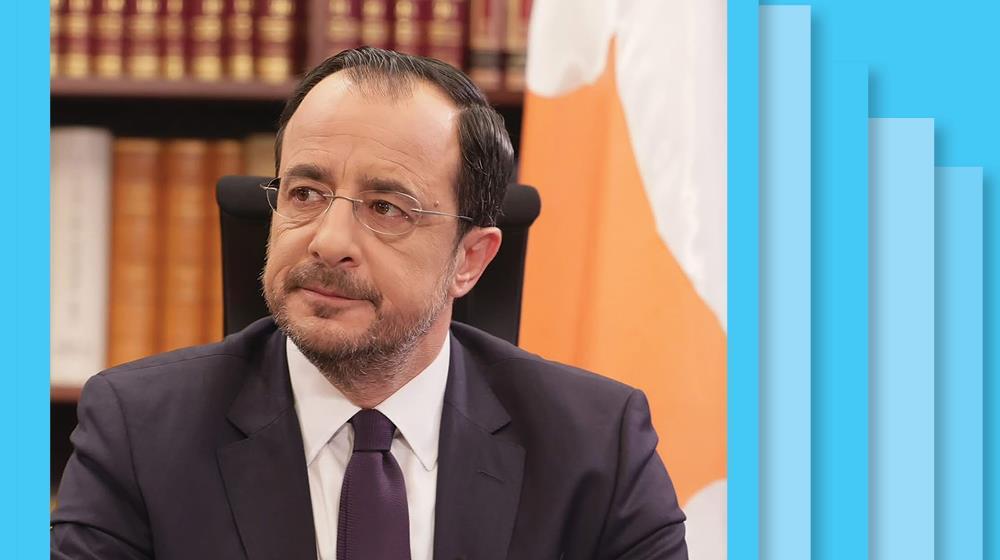
"The greater participation of citizens, dialogue and accountability are the answer to the growing sense among citizens that their voice is not heard and that decisions are taken far from them," indicated President of the Republic of Cyprus Nikos Christodoulides.
According a presidency press release, he was speaking via videoconference at a roundtable discussion organised by ‘The Economist’ magazine in Athens on the topic " Democracy in decline or in a crisis?”.
President Christodoulides referred to policies adopted by the government for a stronger participatory democracy, such as the establishment of the "Legislative Initiative of Citizens," so that with the collection of 5,000 signatures citizens would acquire the right to shape policy; lowering the eligibility age for election to 21; and the automatic registration on the electoral rolls and right to vote for all citizens who turn 17.
He also referred to several other digital tools that strengthen citizens' voice in the decision-making process through the use of technology, such as e-consultation for public consultations, the "Voice of the Citizen" for advisory votes, the "Ekfrasi" platform, which gives young people a forum to submit proposals and suggestions, and the online platform diakivernisi.gov.cy, through which citizens can at any time see the progress of the implementation of government actions and policies.
"I do not believe that Democracy is in decline, but we cannot ignore that it is being tested," the President of the Republic noted at the opening of the discussion, which was also attended by the President of the Hellenic Parliament, Konstantinos Tasoulas.
He specifically said that Democracy is being tested by the questioning of institutions, by new technologies and new modes of communication that drastically change public debate and the citizen's relationship with politics, and above all, it is being tested by the growing sense among citizens that politics is not adapting quickly enough to their real concerns and to the changes that affect their daily lives.
"And this, I believe, is perhaps the most important challenge facing our democracies today," he stressed.
The President of the Republic referred to the successful completion of the Cyprus Presidency of the Council of the European Union, which aimed to bring the Union closer to citizens and to understand their everyday concerns, to be able to adapt to the major changes of our era and to provide substantive answers to the real problems of our societies.
"There is a direct connection between the quality of Democracy and the ability of institutions to adapt, to listen and to provide solutions," he said, noting that the great challenge ahead of us is to ensure that Democracy does not merely observe the developments of the digital age, but adapts and makes use of its possibilities.
"And the digital age, despite the undeniable risks it creates, at the same time offers us new tools for more direct communication and more meaningful participation. And we must make these tools our allies," he concluded.