







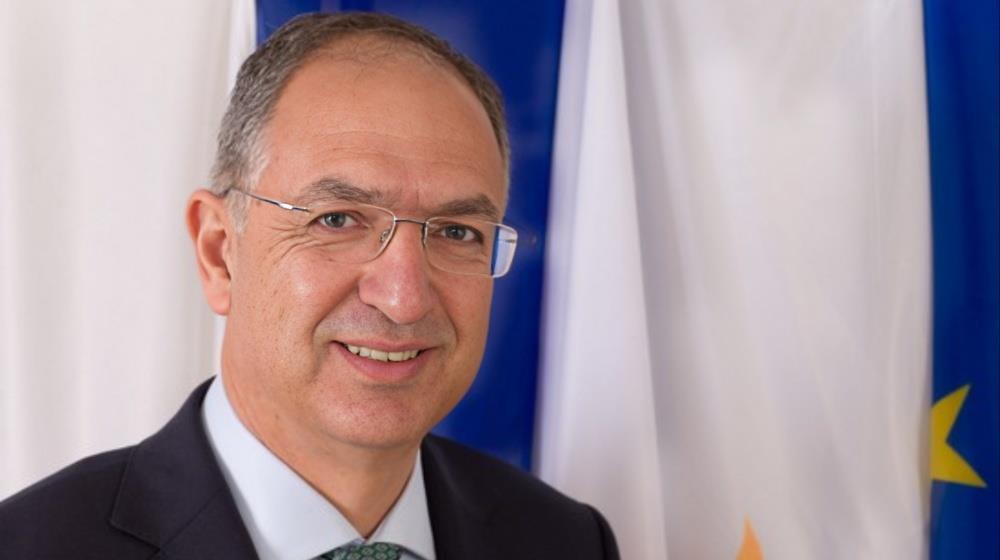
The European Commission's first-ever dedicated strategies for island and coastal communities, bringing together existing and future Commission actions, were presented by Commissioner for Fisheries and Oceans Costas Kadis and Executive Vice-President Raffaele Fitto in Brussels, following the conclusion of the College of Commissioners meeting.
Both strategies will be officially presented on 26 June in Paphos, in cooperation with the Cyprus Presidency of the Council of the EU.
On the coastal communities strategy, Commissioner Kadis noted that coastal areas are characterised by "high diversity — from small fishing villages to major port cities", requiring "tailored, place-based solutions rather than a one-size-fits-all approach." He also noted that the strategy was announced under the European Ocean Pact and covers 95 million people along 70,000 kilometres of coastline across 22 coastal Member States.
€265 billion in gross value added annually
According to Kadis, coastal areas generate around €265 billion in gross value added annually, while facing mounting pressures from climate change, pollution, unbalanced tourism and demographic decline. "They are essential for maritime trade, tourism, fisheries, renewable energy, cultural heritage and security, as many represent EU maritime borders. At the same time, they are increasingly exposed to major pressures: climate change, pollution, unbalanced tourism and demographic decline," he stated.
The strategy's three pillars — Prosperity, Resilience and Liveability — are underpinned by 13 flagship actions. Under Prosperity, the strategy aims to diversify the sustainable blue economy, including the dual use of fishing vessels for pescatourism, the development of a blue carbon credit certification methodology, and blue bioeconomy innovations such as algae-based fertilisers.
On the Resilience pillar, Kadis stressed the importance of leveraging "advanced digital capabilities for situational awareness, simulations and scenario planning", and promoting the involvement of coastal stakeholders — fishers, port authorities and local maritime actors — in maritime surveillance through voluntary reporting of suspicious activities at sea.
On the Liveability pillar, the Commissioner acknowledged in response to a CNA question that the problem caused by "asymmetric" tourism in coastal and island areas is complex. "This is a more complex problem, and if we had done enough, we would not need a strategy, nor measures to address and balance the tourism burden. So it is indeed a challenge, and the strategy includes measures to address it" Kadis said. In this regard, the strategy puts forward the forthcoming Pan-European Investment Platform for Affordable and Sustainable Housing, in partnership with the EIB, alongside the future Affordable Housing Act as key tools.
All the measures can be utilised by Cyprus
Asked how Cyprus would benefit from the new strategies, Commissioner Kadis said that "all the measures that I presented can be utilised also by Cyprus." As a prime example, he cited the dual use of fishing vessels for pescatourism — a proposal that, he noted, originated from Cyprus itself. This, he said "is an idea that we received from Cyprus, from Greek islands, and other areas of Europe." He noted that the current regulatory framework makes it "difficult or impossible" for fishers to use their vessels for tourist activities, which would provide them with "additional income and economic viability."
On the Prosperity pillar, Kadis underlined that sectors such as innovation, digitalisation and offshore renewable energy are "areas where Cyprus and modern Cyprus has developed a lot of activities, and these activities will be boosted for the benefit of the island community and will attract new people in the blue economy sectors."
On the climate dimension, the Commissioner noted that Cyprus has already developed a national climate adaptation plan, adding that the strategy "explores ways to support the implementation of the measures that are included in the adaptation plans of the Member States." He concluded that "every measure under the three pillars that we announced can be adopted and can be utilised to the conditions of the different coastal communities and different Member States, including Cyprus."
Four pillars: economic development, connectivity, competitiveness and innovation
The islands' strategy, presented by Executive Vice President Fitto, covers all EU islands across 16 Member States, with a total population of around 17 million, including the three island Member States — Cyprus, Ireland and Malta — home to 6.6 million inhabitants. It is structured around four pillars: economic development, connectivity, competitiveness and innovation — under which the cost of insularity is analysed for the first time; energy security, environmental protection and climate resilience; communities, demography and quality of life; and security and crisis preparedness, with governance as a horizontal enabler.
On Cyprus specifically, the strategy acknowledges that while GDP per capita is broadly in line with the EU average, stakeholders from the island emphasised the structural economic constraints stemming from insularity and, in particular, the small size of its market. Cyprus is explicitly named as a "remote region" for the purposes of the General Block Exemption Regulation (GBER), enabling it to benefit from State aid for air and maritime transport services for its residents, with higher aid intensities for airports and ports.
Of particular relevance are the explicit references to ETS exemptions covering Greek islands: Member States may exempt shipping companies from the obligation to surrender allowances for emissions released until 31 December 2030, for voyages between ports of islands with no road or rail link and fewer than 200,000 permanent residents and ports under the jurisdiction of the same Member State. An equivalent exemption is provided under the FuelEU Maritime Regulation. On this point, Commissioner Kadis, responding supplementarily, said that "the Commission will give due attention to the situation of the European islands, and consider the potential issues that may affect their competitiveness, connectivity and cost of living as part of the upcoming ETS review, which is planned for July, as well as the reviews of the Alternative Fuels Infrastructure Regulation and FuelEU Maritime." He added that "at this moment, we cannot say more — this is something that will be discussed in the context of the reviews that are upcoming."
A political commitment
Presenting the islands' strategy, Executive Vice President Fitto underlined its significance as a political commitment at the highest level. "This is the first time that we present this strategy for islands, and this is a clear commitment of the European Commission" he said, noting that it had been preceded by intensive work with stakeholders and local authorities, and that he had personally visited many island areas across Europe where the problem "is very crucial and important."
On funding, Fitto noted that €12.5 billion is available for islands in the current 2021-2027 programming period, with resources redirected through the cohesion policy mid-term review towards key priorities including competitiveness, housing, energy and water. Looking ahead to the next MFF, he described the strategy as a tool for Member States within the new budget structure built around national and regional partnership plans, which will integrate results from cohesion, agriculture and fisheries. "The approach is integrated," he stressed, noting that he coordinates three additional Commissioners with the aim of "creating the conditions for an integrated approach to these different matters."
A central finding of the islands' strategy is the concept of the "cost of insularity", analysed in a new OECD report published alongside it. Transport costs can exceed mainland benchmarks by over 300%, local government spending per capita can be 30-50% higher, and housing prices in some island municipalities may be 75-130% higher than on the mainland. In Sardinia, the economic cost of insularity can amount to as much as 36% of GDP per capita. The Commission announced it will carry out an in-depth analysis of the cost of insularity and best practice mitigation measures, with a particular focus on the transport sector.
(Source: CNA)
