






A senior European Central Bank (ECB) official has urged EU policymakers to move beyond passive support and take concrete steps to enhance the euro’s international standing, warning that Europe risks falling behind as China and the United States deliberately promote their currencies.
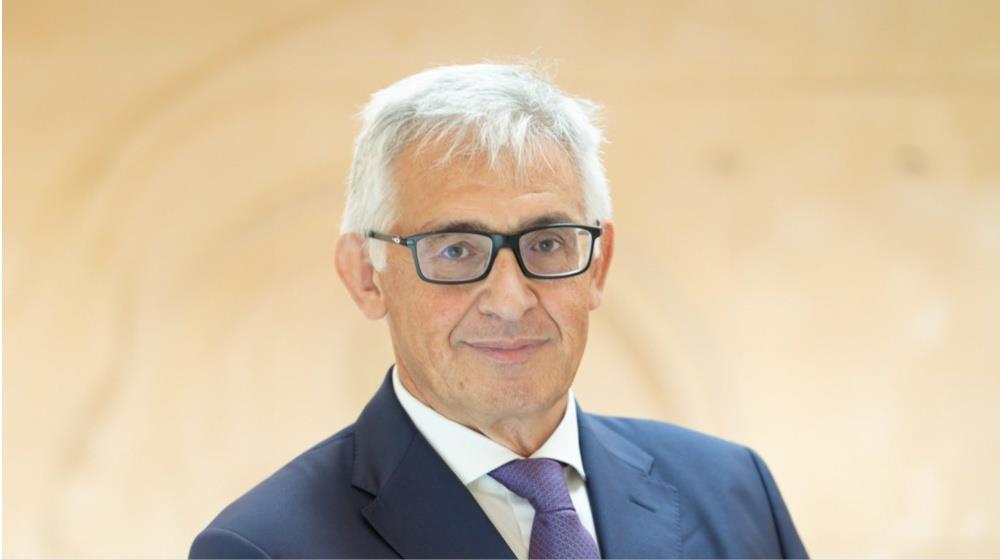
In an op-ed by Member of the ECB’s Executive Board Piero Cipollone, the central bank highlights that while the euro has modestly gained ground in recent years, Europe can no longer afford to treat the currency’s international role as an afterthought. The piece is being offered exclusively to one media outlet per euro area country and coincides with the ECB’s release today of its annual “Report on the International Role of the Euro”.
“The international monetary system is becoming more contested,” Cipollone writes. “Major economies that once trusted the system to work on its own are now actively shaping the use of their currencies. Europe has so far been an exception.”
Modest gains, but new threats
According to the article, a composite measure of the euro’s international use has risen by around 1.5 percentage points since the mid-2010s. The euro accounts for roughly 20% of global reserves — a level stable for two decades — but issuance of international debt in euros reached nearly €1 trillion last year, the highest since the currency’s creation.
During episodes of market stress in 2025, investors turned to euros and euro-denominated assets as safe havens even as they sold US dollars and Treasuries. Cipollone attributes this progress to Europe’s openness, commitment to the rule of law, central bank independence, and the single market.
Targeted European actions have also delivered results. It is noted that the euro has overtaken the dollar as the leading currency in the global green bond market, thanks to the EU’s framework on sustainable finance. Instant payments have grown rapidly following EU legislation and the Eurosystem’s pan-European system.
Rising competition
However, Cipollone warns that competitors are moving with clear intent. Nearly a third of China’s external trade is now settled in renminbi, up from almost nothing a decade ago. The renminbi’s share in global trade finance has reached 8%, surpassing the euro. More than 20% of French trade with China is already invoiced in renminbi.
In the United States, new legislation supporting dollar-denominated stablecoins reflects a strategy to extend American monetary dominance into the digital sphere.
“The world’s largest economies are taking deliberate action. Europe cannot afford to be the one that does not,” Cipollone states.
ECB initiatives and call for broader EU action
Within its mandate, the ECB says it is supporting the euro’s role through macroeconomic stability and liquidity provision. It has expanded its EUREP repo facility to give more central banks standing access to euro liquidity. Starting in September 2026, the ECB will issue tokenised central bank money for wholesale settlements, and it is preparing a digital euro for retail payments. Efforts are also underway to link Europe’s fast payment system with those of other countries.
Cipollone stresses, however, that the most important drivers of a currency’s international standing — economic strength, geopolitical weight, and legal certainty — lie with EU legislators. He calls for completion of the single market, a savings and investments union, higher productivity, and stronger external and energy security.
“A stronger international role for the euro will not come about by itself. We will have to choose it, and put words into action,” the ECB Executive Board member concludes.
Euro strengthens global role in 2025, but ECB warns of growing geopolitical challenges
The international role of the euro strengthened moderately in 2025, consolidating its position as the world's second most important currency, according to the European Central Bank's latest report on the international role of the euro published on Tuesday.
The ECB said the euro's share across a broad range of indicators of international currency use increased to around 20% last year, extending a gradual upward trend that has been evident since 2014.
One of the strongest drivers of the increase was a surge in euro-denominated international debt issuance, which rose by about 30% compared with 2024 and reached its highest level since the launch of the single currency.
The euro also became the leading currency in the global market for green and sustainable international bonds for the first time, while foreign portfolio investment inflows into the euro area remained close to record levels.
Despite the positive developments, the ECB warned that growing geopolitical fragmentation and the emergence of alternative payment systems continue to pose risks to the international monetary system.
"There is an opening for the euro to enhance its global appeal – provided that European policymakers create the necessary conditions and put words into action," ECB President Christine Lagarde said.
Lagarde stressed that strengthening the euro's global role would require reinforcing three key pillars: economic resilience, legal and institutional integrity, and geopolitical credibility.
(Source: CNA)
