







The unseen mechanics of good governance – timely decisions on licensing, infrastructure, investment and more – shape trust across the board and offer cities a true competitive edge.
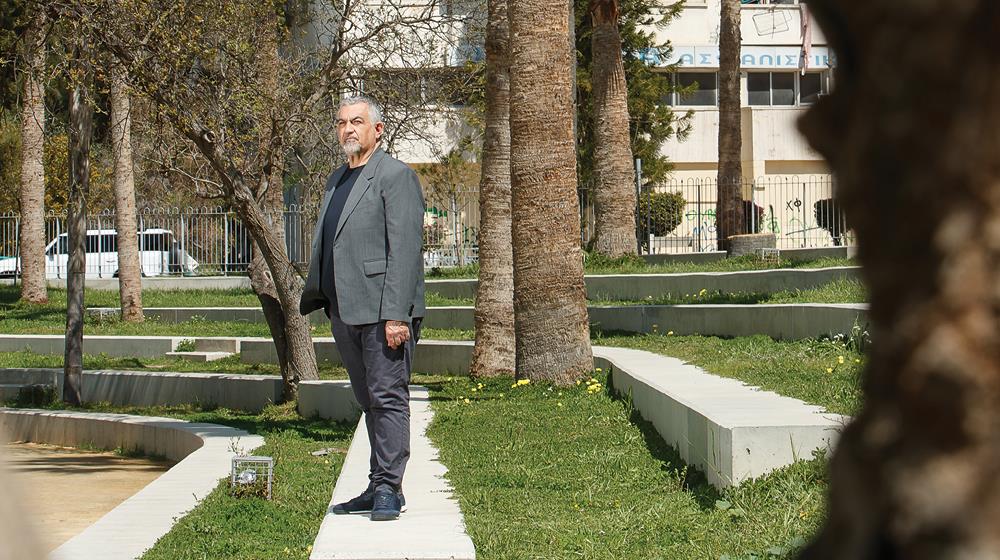
For Angelos Hadjicharalambous, President of the District Local Government Organization of Larnaca (DLGOL), the biggest challenge is to implement reform that will accelerate the city’s progress.
In a recent interview with GOLD magazine, Hadjicharalambous discusses how government reform in Larnaca has become a real competitive advantage for investment and shares his view of what effective local governance looks like.
He also suggests what structural changes are needed for Larnaca to be recognised as a first-choice destination for serious investment capital and which sectors should be prioritised if Larnaca wants a more diversified and resilient economic base.
Among other things, the expert goes on to suggest how engagement with foreign ambassadors and international stakeholders can help Larnaca unlock investment and expertise, while also weighing in on the role local government can play in shaping talent, quality of life and the wider conditions for growth.
How can local government reform in Larnaca become a real competitive advantage for investment rather than just another layer of complexity?
Reform only has value when it makes the system easier to navigate. If it adds bureaucracy, it becomes part of the problem. If it delivers clarity, speed and accountability, it becomes a strategic advantage. That is the real challenge now facing DLGOL. The goal is not simply to merge structures but to convert institutional consolidation into practical efficiency. Investors, businesses and citizens need a single authority that can coordinate infrastructure, licensing and essential services with consistency and discipline. Governance becomes a genuine asset when it reduces uncertainty, shortens timelines and sends a clear message that Larnaca is serious about delivery. This is why the recent acceleration in planning and building permit processing is so important. It reflects a direction based on targeted modernisation, stronger organisation and measurable outcomes. Reform must be judged by results on the ground. The real test is whether people can move faster, plan with greater confidence and engage with a system that works in practice.
What does effective local governance actually look like when it comes to supporting business growth and accelerating major projects?
Effective governance is not an abstract concept. It is visible in outcomes that matter to the economy and to daily life. Faster permits, reliable infrastructure delivery and smoother interaction with public services are the clearest benchmarks. Recent licensing performance offers a strong indication of progress. In February 2026, 216 planning applications were processed against 187 submitted, while 392 building applications were processed against 239 submitted. That means a processing rate of 116% and 164% respectively. These figures matter because they show not only movement but also a reduction in backlog and a stronger level of predictability. For businesses and investors, predictability is critical. Capital does not only seek opportunity; it seeks environments where processes are understandable, timeframes are realistic and implementation is not constantly delayed by administrative uncertainty. When governance provides that level of confidence, it directly supports investment decisions. At the same time, efficiency cannot stand alone. It must be backed by delivery capacity. The 2026 budget of approximately €115.3 million, including €57.7 million in capital expenditure, supports major infrastructure priorities such as sewerage expansion, flood protection works, smart water metering, upgraded water networks, a new water storage tank in the Klavdia area and wider environmental infrastructure. Faster decision-making, combined with the ability to implement projects, is what ultimately creates a pro-growth environment.
What structural changes are needed for Larnaca to be recognised as a first-choice destination for serious investment capital?
The first requirement is a licensing system that works in practice, not only in principle. Serious investors do not avoid regulation; they avoid uncertainty, inconsistency and delay. Approvals need to be transparent, professionally managed and digitally accessible. A system that can be monitored and navigated with confidence is far more attractive than one that depends on fragmented procedures and informal follow-up. The second requirement is operational strength. A modern local authority must have the staffing, technical knowledge and internal organisation needed to manage both routine administration and large-scale infrastructure projects. This is not just a question of numbers; it is a question of capability. Human resources, internal systems and technical coordination all determine whether an authority can perform consistently. The third requirement is institutional credibility. Larnaca must show that it can plan, coordinate and execute with discipline. Cities attract serious capital when they prove that governance is stable, predictable and capable of delivery over time. Investors look for environments where the public sector is not a source of disruption but a reliable partner in implementation. In that sense, reform must move beyond announcements and become embedded in the daily functioning of the institution. That is where confidence is built.
Which sectors should be prioritised if Larnaca wants a more diversified and resilient economic base?
Larnaca must build on its existing strengths, while actively broadening its economic model. Tourism and hospitality remain central and will continue to play a leading role, especially given the city’s connectivity and the continued importance of airport activity. Logistics, maritime services and wider blue economy sectors also present strong opportunities because of Larnaca’s location and strategic position. But resilience cannot depend on one or two traditional sectors alone. A stronger long-term model requires growth in technology, innovation, education, healthcare services, renewable energy and sustainable infrastructure. These are the sectors that can add depth to the economy and create a more balanced ecosystem. The most successful cities are not those that rely on a single growth engine. They are the ones that combine established industries with new, knowledge-driven and sustainability-focused activity. Larnaca has the opportunity to move in exactly that direction. This also means recognising that infrastructure policy and economic policy are now directly connected. Water management, environmental resilience and digital transformation are no longer secondary concerns. They are part of the basic architecture of a competitive city. A place that cannot manage its resources, modernise its systems or protect its infrastructure will struggle to attract quality investment in the long term.
How can engagement with foreign ambassadors and international stakeholders help Larnaca unlock investment and expertise?
Subnational cooperation has become increasingly important in the modern investment and policy environment. Cities and districts cannot operate in isolation. They need to position themselves within broader international networks and use those connections strategically. For Larnaca, this means building partnerships that lead to practical outcomes rather than symbolic visibility. The value lies in securing technical expertise, creating access to funding, enabling knowledge transfer and opening channels for investment. The most useful collaborations are those focused on clear areas such as water management, sustainability, smart systems, infrastructure planning and local investment promotion. International engagement should therefore move beyond formal meetings and ceremonial contact. It should become a working tool for development. When relationships with embassies, institutions and foreign stakeholders are linked to specific priorities, they can create measurable value for the local economy. Cities that succeed internationally are not necessarily those with the most meetings. They are the ones that know how to convert relationships into projects, expertise and opportunities. That is the standard that Larnaca should pursue.
What role can local government play in shaping talent, quality of life and the wider conditions for growth?
Local government has a much broader role than simply delivering technical infrastructure. It shapes the environment in which people live, work, invest and build their future. Reliable infrastructure remains fundamental but it is only one part of a larger picture. Quality of life, environmental standards, urban functionality and access to services all influence investment decisions. Businesses consider whether a city can support their workforce. Professionals consider whether it offers stability, efficiency and a good everyday experience. Talent is increasingly mobile; that changes the equation. People are more willing than ever to choose cities that function well and offer real quality of life. The recent water situation is a good example of how infrastructure, sustainability and everyday life are directly linked. Following a reduction in the national water supply, pressure reduction measures were introduced across supply networks as part of a wider conservation effort. This was a necessary response but it also highlighted an essential reality: infrastructure resilience is not just a technical matter. It affects social confidence, investor perception and the attractiveness of the city as a place to live and work. In that sense, local government is not just managing assets. It is shaping the conditions under which talent stays, businesses expand and communities remain viable. Investment often follows talent and talent follows quality of life.
If governance is a driver of growth, what is the single reform that could best accelerate Larnaca’s trajectory today?
The most important reform is a comprehensive transformation of the licensing and permit system. This is the point where confidence is either built or lost. A system that is fast, transparent, properly staffed and digitally supported can have an immediate effect on the investment climate. It is one of the few reforms that can quickly change how a city is perceived by businesses, developers and citizens alike. The recent performance in application processing shows that improvement is already possible. But isolated progress is not enough. The next step is to make this performance structural, predictable and sustainable. That means embedding speed and reliability into the system itself rather than treating them as temporary gains.
Larnaca does not need more broad narratives. It needs a system that works consistently in practice. Once governance proves that it can deliver with discipline, clarity and speed, the city’s growth potential becomes far stronger. That is the real opportunity created by reform. Not simply to reorganise institutions but to build a public authority that makes development easier, faster and more credible. When governance works, it stops being an obstacle and becomes one of the city’s strongest advantages.
This interview first appeared in the April edition of GOLD magazine. Click here to view it.
