







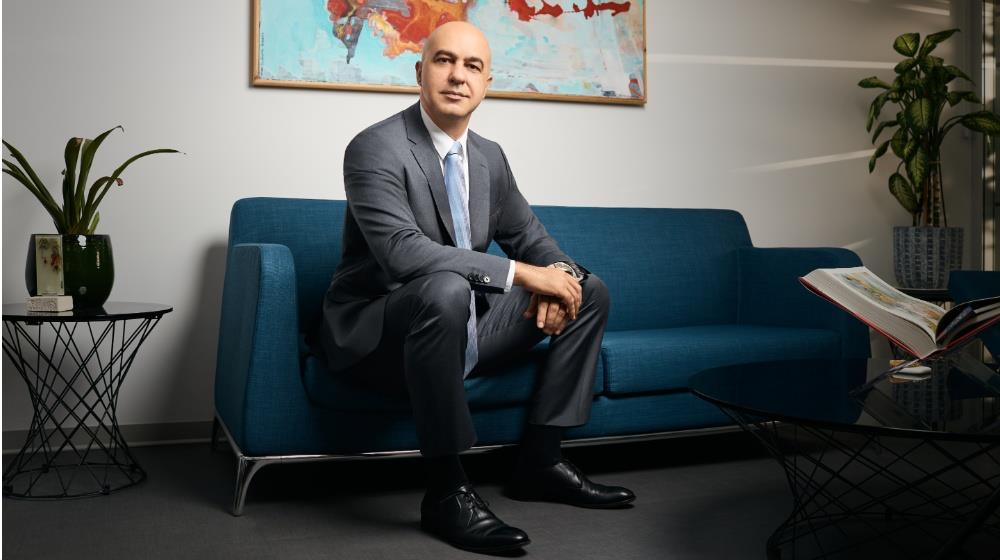
"CySEC has transitioned from a newly established institution to become a respected international regulator, operating within a comprehensive and continuously evolving supervisory framework," Dr George Theocharides, the Chairman of the Cyprus Securities & Exchange Commission (CySEC) notes, as the institutation marks its 30th anniversry.
In an interview with CBN, the Chairman provides an overview of the first 30 years of the Cyprus Securities & Exchange Commission (CySEC) and discusses the organisation’s evolution and achievements.
Theocharides also talks about the defining milestones in CySEC's history so far, including Cyprus' accession to the EU, amid the expansion and internationalisation of the investment sector.
Among other things, he also discusses how Cyprus, as a member of the EU, can retain its image as a competitive investment destination, while meeting the prescribed requirements while also weighing in on the particular markets or regions where he sees Cyprus strengthening its positioning.
Theocharides, in addition, shares his thoughts on how CySEC will be 10 years from now while also revealing what he considers to be his own most significant achievement so far as its Chairman.
CySEC is celebrating its 30th anniversary this year. What are the most important milestones that it has reached in the past three decades?
Over the past 30 years, CySEC has evolved into a modern, fully EU-aligned regulator, with a strong focus on investor protection, market integrity and effective supervision. During this time, CySEC has transitioned from a newly established institution to become a respected international regulator, operating within a comprehensive and continuously evolving supervisory framework. A defining milestone on this journey was Cyprus’ accession to the European Union, which led to the full harmonisation of our legal and regulatory framework with EU legislation. This significantly strengthened investor protection, transparency and market integrity, while also increasing the scope and complexity of supervision.
During this period, CySEC has actively contributed to the implementation of successive waves of EU reforms and has developed a robust, risk-based supervisory model, as a leading contributor to the European Securities and Markets Authority (ESMA). CySEC’s model is increasingly forward-looking and supported by data-driven analysis, thematic reviews and technology-enabled supervision, allowing for more effective oversight of a growing and increasingly complex market.
At the same time, the investment sector in Cyprus has expanded and internationalised considerably. CySEC has supported this growth by facilitating the introduction of new products and services, while maintaining a safe, transparent and well-regulated environment. The continuous monitoring of supervised entities, stricter disclosure requirements and targeted guidance have further enhanced investor protection and helped mitigate risks such as fraud and mis-selling.
CySEC has also strengthened its international presence, actively participating in European and global bodies such as ESMA and IOSCO, contributing to the shaping of regulatory policy and promoting supervisory convergence and consistency across jurisdictions. In parallel, it has adapted its supervisory approach to address emerging sectors, including digitalisation, fintech and crypto-assets, striving to balance innovation with effective risk mitigation. Efforts to enhance financial literacy and investor education have also been prioritised, in recognition of the growing participation of retail investors.
Internally, CySEC has focused on improving its operational efficiency, governance and transparency, continuously upgrading its processes and investing in staff expertise to meet evolving market demands. Overall, these milestones reflect CySEC’s transformation into a resilient and forward-looking authority, committed to effective supervision, strong investor protection and the sustainable development of the financial market.
With stricter EU regulations in place, how can Cyprus retain its image as a competitive investment destination, while meeting the prescribed requirements?
Stricter EU regulations are a catalyst for strengthening our credibility as an investment destination. Full alignment with the EU framework ensures a transparent, stable and well-regulated market, which is exactly what serious, long-term investors seek. In this context, CySEC plays a pivotal role as a modern, risk-based supervisor. Our focus is on effective oversight that safeguards investor protection, while allowing well-regulated firms to operate efficiently. We have enhanced our supervisory model through technology, data-driven analysis and the continuous monitoring of firms throughout their lifecycle.
At the same time, we maintain close and constructive engagement with market participants, while also working in strong coordination with European and international supervisory authorities, ensuring the consistent application of rules and reinforcing cross-border trust. This balanced approach, combining robust supervision, cooperation and transparency, reinforces Cyprus’ position as a credible, competitive and forward-looking investment hub within the European Union.
Retail investor participation has surged across Europe. How does CySEC enhance investor protection without stifling access to markets?
Retail investor participation across Europe has, indeed, increased significantly and, for CySEC, the priority is clear: to enhance investor protection while preserving fair access to markets. We have strengthened our monitoring and surveillance capabilities, using advanced technology to detect and act against fraudulent activity targeting retail investors. We also issue frequent warnings on unauthorised entities, fake websites and misleading investment schemes as an essential part of our day-to-day supervisory work.
Financial literacy has also long been one of CySEC’s strategic priorities. Our initiatives place particular emphasis on younger audiences, who are increasingly exposed to higher-risk products and are sometimes financially illiterate. We are investing in targeted awareness campaigns – particularly through digital channels – to help investors critically assess investment opportunities, including those promoted online by so-called “finfluencers”, and recognise and avoid financial scams. At the same time, we have undertaken a range of educational initiatives aimed at students, investors and the wider public, covering money management, responsible investing and protection from digital financial risks. In parallel, we develop financial education tools and resources designed to strengthen informed and responsible financial decision-making.
CySEC has also actively participated from the outset in the design, adoption and implementation of Cyprus’ national financial literacy strategy, with active participation in the Cyprus Financial Literacy and Education Committee (CyFLEC), and leading efforts regarding the safe use of digital financial products and services by the public. As access to markets expands, especially in areas such as crypto-assets, the challenge is to maintain the right balance. Our approach combines robust supervision, timely intervention and continuous investor education, ensuring that participation in financial markets is both accessible and well-informed.
Are there particular markets or regions where you see Cyprus strengthening its positioning?
We continue to see interest from firms with international operations, particularly those seeking regulatory certainty and consistent supervision across jurisdictions. In this context, CySEC places strong emphasis on supervisory convergence and close cooperation with European and international counterparts, ensuring the consistent application of EU rules.
At the same time, we are strengthening our supervisory approach in areas such as digitalisation, crypto-assets and other evolving sectors, where risks and opportunities are closely intertwined. Our objective is to ensure that Cyprus remains a credible and trusted jurisdiction, where market development is underpinned by effective supervision, investor protection and full alignment with the EU regulatory framework.
ESG is becoming central to capital markets. How is CySEC ensuring that sustainability disclosures are meaningful and not just box-ticking exercises?
ESG is, indeed, becoming central to capital markets and, for CySEC, the priority is to ensure that sustainability disclosures are meaningful, consistent and reflect the actual investment strategy rather than being a simple box-ticking exercise. We closely follow and adopt ESMA guidance and EU frameworks, including the SFDR and the EU Taxonomy, and actively contribute to European supervisory initiatives on sustainability and greenwashing. Our approach is risk-based and increasingly focused on substance. Since 2023, we have gone beyond reviewing disclosures on paper by assessing underlying portfolio investments, pre-contractual documentation and website information, and seeking expert input thereon. CySEC’s latest relevant substance checks were in the sphere of the 2025 ESMA Guidelines on Fund Names, a very important piece of level 3 legislation largely incorporated into the recent European Commission’s SFDR review proposal.
In this context, CySEC also actively participates in the European Commission’s DG REFORM ESG Risk Management Framework project, a three-year technical support initiative running from September 2023 to August 2026. This project aims to strengthen supervisory capacity across Member States in identifying and addressing ESG-related risks, while supporting the development of risk-based supervisory methodologies and analytical frameworks. Through this work, CySEC is enhancing its ability to integrate ESG risks into supervision, improve ESG data quality and develop more robust tools to assess sustainability-related disclosures and investment practices. It also promotes supervisory convergence at an EU level, ensuring a more consistent approach to tackling risks such as greenwashing. We are also strengthening guidance to the market, supporting investment managers in better understanding ESG obligations and the need to develop credible ESG-oriented products. Ultimately, through enhanced supervision, EU cooperation and the continuous development of our supervisory tools, our aim is to strengthen transparency, prevent greenwashing and ensure that ESG considerations are effectively embedded in both market practices and supervisory oversight.
Looking back over your tenure as Chairman, what do you consider your most significant achievement at CySEC?
I would highlight the strengthening of CySEC’s supervisory framework and its readiness to address an increasingly complex and fast-evolving financial environment as a key achievement. A central priority has been the continuous enhancement of our supervisory practices, including the adoption of technology and data-driven tools, to improve both the effectiveness and efficiency of oversight. This has allowed us to respond more proactively to emerging risks, particularly those arising from digitalisation and new financial products.
At the same time, we have reinforced our contribution at a national, European and international level, ensuring that Cyprus is actively engaged in regulatory developments through bodies such as ESMA and IOSCO, and aligned with evolving EU standards. Another important area has been the promotion of financial literacy, recognising that increased retail participation – especially in higher-risk areas such as crypto-assets – requires better-informed investors. Strengthening financial education remains essential to supporting responsible market participation. Overall, the focus has been on ensuring that market development is supported by strong supervision, investor protection and regulatory consistency in an evolving environment.
If we fast-forward to CySEC’s 40th anniversary, what will success look like and what internal transformations – talent, technology, governance – do you believe are necessary for CySEC to remain an effective regulator over the next decade?
I believe that the adoption of AI and other technologies to enhance the performance of regulation and market surveillance will be a key feature of the coming decade. There are clearly numerous opportunities for its application in the securities industry, although ESMA’s analysis shows that the actual level of implementation to date varies widely, both by sector and entity. Whilst in asset management, ESMA notes that an increasing number of managers leverage AI in the development of their investment strategies, risk management and compliance, few have developed a fully AI-based investment process and fewer still publicly promote the use of AI. Hence ESMA and other financial regulators have placed the use of AI and other technologies in the finance sector under increasing scrutiny and regulators will be required to invest in the development of their internal systems to stay ahead.
Key CySEC Figures:
• €11.4 billion total Assets Under Management (AUM)
• +7.5% quarterly AUM increase
• €10.1 billion Net Asset Value (NAV)
• 312 total Management Companies & UCIs supervised
• 217 externally managed UCIs
• 29 internally managed UCIs
• 66 external fund managers
Investment Allocation
• 30.7% private equity
• 17% real estate
• 14.5% hedge funds
• 9.7% funds of funds
• 28.1% other investments
Note: These figures are based on the quarterly figures statistics as of 30/09/2025.
• Over €29.5 million in fines imposed in the last decade (2016–2026)
• 252 Cyprus Investment Firms (CIFs), whose total assets amounted to €4.5 billion at the end of the third quarter of 2025
• 128 Administrative Service Providers (ASPs), whose total assets amounted to €134.79 million at the end of
the third quarter of 2025.
• 312 Management Companies and Undertakings for Collective Investment (UCIs).
• €11.4 billion Total Assets Under Management (AUM) in the third quarter of 2025, with approximately 25% invested in the Cypriot economy
