








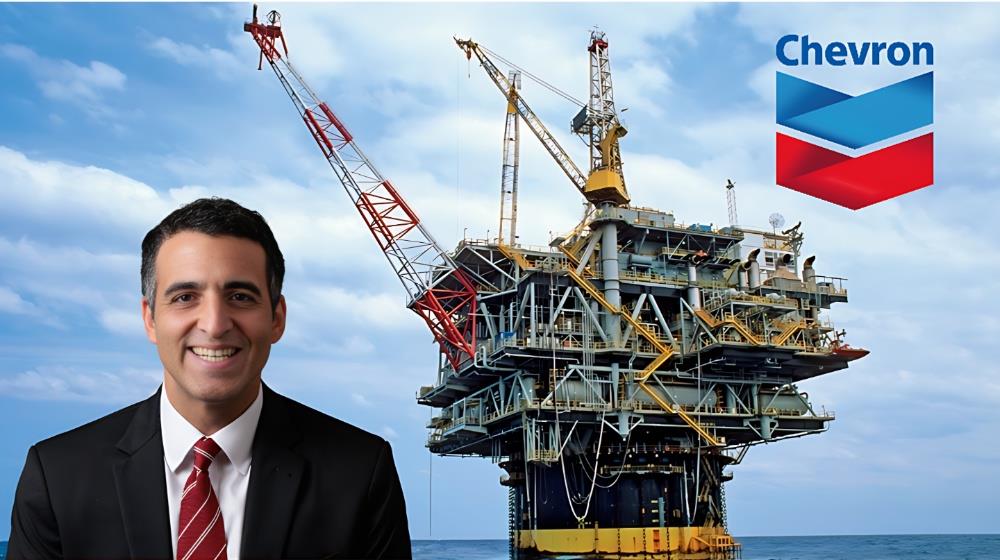
"Chevron sees the Eastern Mediterranean as a meaningful long-term gas region, where we have around 44 trillion cubic feet of gross resource. Our footprint reflects that scale with producing assets in Israel, a growing upstream presence in Egypt and new exploration interests in Greece," Basil Allam, Country Manager, Chevron Cyprus says.
"For Cyprus, this broader regional position matters," he continues, "It means that we’re not approaching Aphrodite in isolation but as part of an integrated portfolio that links high-quality resources to nearby markets with growing demand."
Chevron is a major global integrated energy company, headquartered in Houston, Texas, with global operations spanning exploration, production, refining and energy distribution. In Cyprus, Chevron is the operator of the Aphrodite offshore natural gas field, located in Block 12 of Cyprus’ Exclusive Economic Zone and, in a recent interview with GOLD magazine, Allam elaborated not only on its future plans but also what initially brought the company to the island.
Among other things, he also shared the advice he would give other US companies considering Cyprus for their operations.
What is the current status of Chevron’s Aphrodite development in Cyprus?
Aphrodite has moved into FEED, which is a critical step to enabling a Final Investment Decision. Our team is focused on shaping a development that is competitive, reliable and built to last. The concept is straightforward: a modern offshore floating production unit in Cyprus that will produce 800MM standard cubic feet per day and send it to Egypt via pipeline, where demand continues to grow. We’re making steady progress, working closely with our partners and the Government, and keeping to the disciplined approach that investors expect from Chevron.
Chevron has significantly expanded its presence in the Eastern Mediterranean over the past five years, particularly following its acquisition of Noble Energy. How does Chevron view the strategic importance of the broader region?
Chevron sees the Eastern Mediterranean as a meaningful long-term gas region, where we have around 44 trillion cubic feet of gross resource. Our footprint reflects that scale with producing assets in Israel, a growing upstream presence in Egypt and new exploration interests in Greece. For Cyprus, this broader regional position matters. It means that we’re not approaching Aphrodite in isolation but as part of an integrated portfolio that links high-quality resources to nearby markets with growing demand. The East Med offers the right mix of resource depth, infrastructure and commercial opportunity, and we see it as a region where disciplined investment can continue to deliver value for many years.
What initially positioned Cyprus as the right strategic choice for Chevron?
Cyprus became a natural choice for Chevron because the East Med is a geologically rich basin with proven, high-quality gas resources. Aphrodite confirmed that potential early on and it positioned Cyprus as a country with the opportunity to play a meaningful role in how the region develops its energy future. As regional demand for natural gas continues to grow, Cyprus sits at the centre of an emerging network of energy integration across the East Med. That combination of resource potential, market proximity and cooperative relationships between governments has steadily elevated Cyprus’ role within our portfolio. For us, the project aligns with Chevron’s mission to deliver reliable, affordable ever cleaner energy. Advancing Aphrodite through Front-End Engineering and Design (FEED) reflects disciplined progress but also a shared ambition to strengthen regional integration and bring new gas to market in a way that benefits Cyprus and the wider region.
Are there specific operational or structural challenges for US companies operating from Cyprus?
Cyprus is a good place to invest because it offers a stable, predictable environment and a government that is willing to engage constructively with industry. Like any country developing a modern energy sector, there have been moments when we needed to work through complex issues together but the important point is that we did work through them. That ability to reset, align and keep moving forward says a lot about Cyprus’ maturity as an investment destination. Cyprus offers clear policy direction, strong local and regional talent, and a business culture built on partnership, which are all important for long-cycle energy projects. The fundamentals are solid and, while no investment environment is perfect, we’ve consistently seen the Government open to improving areas that can be challenging. It’s a place where companies can operate with confidence and build lasting, constructive relationships.
What advice would you give other US companies considering Cyprus for their operations?
For a US company evaluating Cyprus today, I’d suggest starting with a clear view of what you need operationally and how Cyprus can support it. Whether that’s talent, connectivity or access to regional markets. Cyprus is making a deliberate effort to strengthen its ties with the United States and that focus shows up in areas like regulatory modernisation, digital services and support for international firms. Like any market, there are aspects that continue to evolve but the country’s willingness to adapt is a real advantage. For companies looking for a stable base in the East Med with a growing US orientation, Cyprus is a practical and promising choice.
This interview first appeared in the February edition of GOLD magazine. Click here to view it.
