





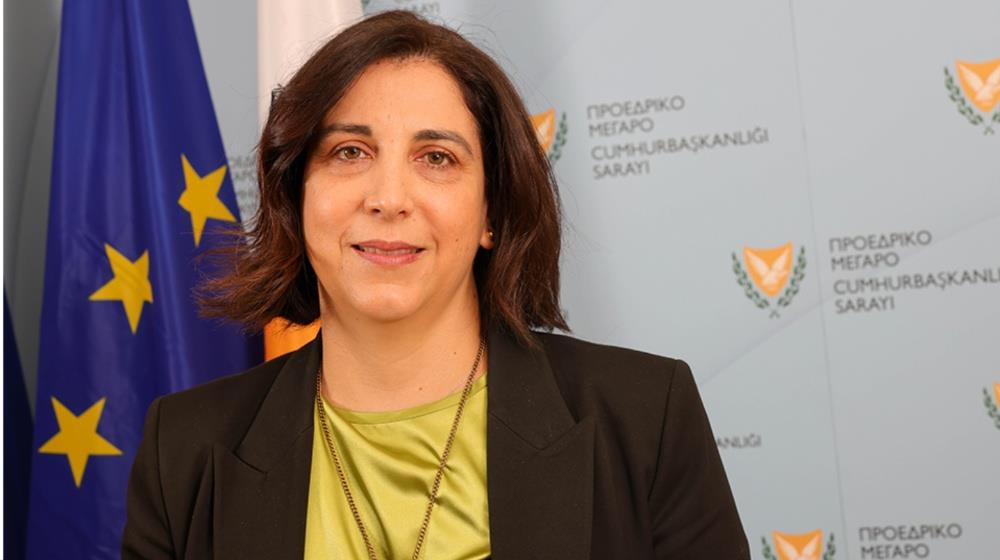
Cyprus will stay the course of prudent, pro‑growth fiscal policy protecting credibility, lowering public debt, and keeping buffers for future shocks, Deputy Minister to the President Irene Piki has said.
Speaking on Tuesday, 10 February, in her address at the EU IFI Network Thematic Conference 2026 organised by the Fiscal Council of Cyprus in Nicosia, Piki also noted that despite a challenging international environment, Cyprus remains among the better‑performing economies in the EU, with growth for 2025 is estimated at around 4%, continuing a solid multi‑year trend.
The Deputy Minister said that the conference agenda – on fiscal management in changing times – "goes to the heart of what citizens expect from us: stability, credibility and the confidence that policy choices today safeguard prosperity tomorrow."
Over the past years, she noted, Europe has had to navigate persistent uncertainty. "Our government has done so by abiding a simple principle: responsible public finances are a foundation for growth, investment and social cohesion," she added.
Despite a challenging international environment, Cyprus remains among the better‑performing economies in the EU. Growth for 2025 is estimated at around 4%, continuing a solid multi‑year trend, Piki said, noting that unemployment is at its lowest level since 2008, “reflecting a dynamic labour market and new opportunities for our people”.
She also said that the country’s public finances were “sound”, and that high primary surpluses and steady growth are putting public debt on a firm downward path, with estimates indicating it will be slightly above 50% by the end of 2026. “This trajectory is further solidified by recent Eurostat data, which ranks Cyprus third in the EU in terms of reduction in public debt” she said, adding that this “significant” decrease is being achieved from a starting point of already low debt levels, “reinforcing the country’s fiscal credibility and distinguishing our performance within the Eurozone”.
These are not accidental outcomes, Piki pointed out, noting they are the result of disciplined budgeting, timely reforms and a clear focus on competitiveness and resilience. “A fact recognised by rating agencies, all of which have upgraded Cyprus to category A”, she said, adding that, only last week Scope upgraded Cyprus, once more from A- to A.
According to the Deputy Minister, the new EU economic governance framework helps Cyprus remain on that path as it sets clearer, more realistic rules that focus on sustainability of debt and manageable deficits.
At the same time, she noted, it allows governments to take ownership of their plans.
“For Cyprus, this means credible multi‑year planning, more predictable policy, and fiscal space that is earned - not borrowed - through responsibility and reform. This is how we keep confidence high among households, businesses and investors”, she said.
The medium‑term outlook for Cyprus remains positive, even as risks persist, the Deputy Minister said, noting that fiscal prudence must go hand‑in‑hand with reform and delivery. “Every euro we save from inefficiency is a euro we can invest in our people and our future”, she added.
Referring to Cyprus’ Presidency of the Council of the EU this semester, she said Nicosia was “fully committed” to advancing a constructive, forward‑looking agenda that strengthens fiscal stability and promotes sustainable growth across the Union. “Our Presidency provides an opportunity to champion policies that reinforce economic resilience, deepen cooperation among Member States, and ensure that the benefits of fiscal responsibility translate into tangible results for citizens throughout Europe,” she added.
Piki also noted that the Cyprus Fiscal Council’s assessments and recommendations “are taken seriously and influence policy choices.”
She also said that independent fiscal institutions “have a distinct contribution to make”, as, beyond checking compliance, they build trust by explaining fiscal choices in clear language.
She underlined that “responsibility attracts investment and that investment supports responsibility through higher growth, stronger revenues and lower risk premium.” This is how we finance better schools and universities, faster digitalisation, cleaner energy, more resilient infrastructure and effective social policy, she added, noting that is also how Cyprus’ role is strengthened as a stable, credible party the region.
Noting that geopolitical uncertainty, climate pressures and demographic trends will continue to test economies and societies, Piki said, “that is precisely why the quality of institutions matters: consistent rules, transparent decision‑making, and continuous evaluation.” Exchanges like the one taking place here today help policies improve in real time, she added.
Piki also noted that Cyprus "will stay the course of prudent, pro‑growth fiscal policy protecting credibility, lowering public debt, and keeping buffers for future shocks and continue to act on the recommendations of the Fiscal Council, engaging constructively and transparently, even when the advice is challenging."
She also said the country will continue investing in the drivers of long‑term growth and prosperity, education and skills, research and innovation, green and digital transition, and modern public services — so that the benefits of growth are felt by citizens across the country.
(Source: CNA)