








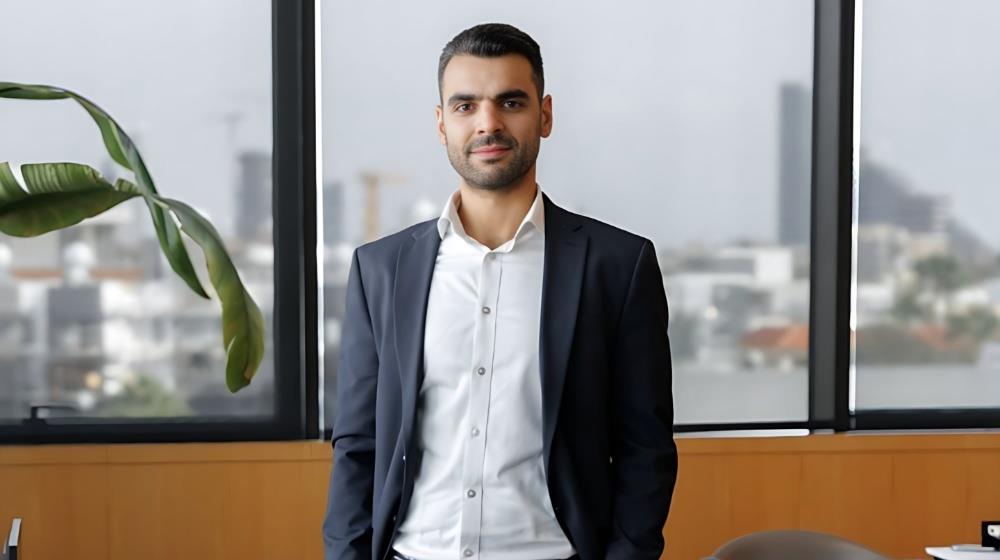
"Aligned with Cyprus’ Vision 2035, which aims to position the country among the best places to live, work, and do business in, the real estate sector has a key role to play in supporting the next phase of Cyprus’ economic model," Constantinos Savvides, CEO, bbf: underlines.
Speaking to CBN after becoming the company's Chief Executive Officer from the start of the year, Savvides also shared his aims and goals within his new role, revealing, "My vision is to position bbf: for sustainable, long-term growth through disciplined strategic planning, underpinned by data-driven decision-making across the entire value chain, from acquisitions and product design to sales and client engagement."
Among other things, the CEO also talks about some of bbf:'s new and upcoming projects, while also elaborating on his view of the overall real estate scene in Cyprus at this time.
Before becoming CEO at bbf:, Savvides had previously been the company's Chief Investment Officer (CIO) since March 2025, following other senior real estate-related positions at other leading companies.
Congratulations on your recent appointment as CEO. What is your vision for the company within your new role?
It is a privilege to be taking on the role of CEO at bbf: and I am grateful to the Board for the confidence and trust they have placed in me. I am stepping into the role with solid foundations already in place – one that allows us to look forward with confidence and clarity as we shape the next phase of the company’s development.
My vision is to position bbf: for sustainable, long-term growth through disciplined strategic planning, underpinned by data-driven decision-making across the entire value chain, from acquisitions and product design to sales and client engagement. Real estate development is inherently long-term; the buildings we deliver today are the result of decisions taken years ago. Standing behind the decisions we make today, therefore, requires a clear long-term mindset, continued investment in innovation, and strong operational and delivery discipline.
A key priority for us will be to strengthen the fundamentals of our delivery model and evolve our people value proposition, ensuring we attract, develop, and retain the talent needed to execute effectively and responsibly.
At the Group level, while real estate development remains our core focus, we will continue to innovate within our core activities and selectively explore diversification across complementary sectors, provided these opportunities align with our corporate objectives and long-term value creation strategy.
bbf: has a well-established reputation on the local property scene. Can you tell us more about some of the company’s new and upcoming projects?
bbf: has earned its place in the market by staying consistent and focused on its identity and its quality over time. The pipeline of our projects reflects not only where we come from, but also where we want to go as a Group.
Looking ahead, 2026 is going to be a pivotal and exciting year for bbf:, as we concurrently bring to the market projects that are truly transformational. Among them is the redevelopment of the historic KEAN site in Limassol, where we are bringing renewed life and identity to a landmark location.
We are also fully mobilising the restoration of the iconic Berengaria Hotel, approaching the project with a great sense of responsibility towards its cultural and architectural legacy. In parallel, we are preparing to introduce Land of Tomorrow to the market, a development that marks the beginning of the broader urban regeneration of the Larnaca seafront.
These projects reflect our ambition, but also our mindset. We are bold in our vision, yet thoughtful in our execution. We care deeply about the places we shape, the communities around them, and the kind of legacy we leave behind. Not just for today, but for the years to come.
More widely, what is your view of the overall real estate scene in Cyprus at this time? How has it changed over the past decade? For example, have buyers’ expectations changed when it comes to their residences and workspaces?
Over the past decade, the Cyprus real estate development sector has had to reinvent itself repeatedly. Today, as an enabler of demographic growth and a service to the country’s evolving needs, the sector has adapted both its practices and its mindset. At the core of this evolution is effectively a shift in how people actually perceive space. Homes and workplaces are no longer viewed in isolation. Greater emphasis is now placed on functionality, energy efficiency, natural light, smart use of space, and the quality of shared and outdoor areas. Increasingly, people are seeking environments that support everyday wellbeing, places that feel intuitive, comfortable and genuinely livable, rather than simply visually appealing.
This shift has been positive for the sector, encouraging higher standards and a more holistic approach to development. Changes bring new challenges, including higher expectations, cost pressures, and the need for regulatory advancements, however they have ultimately led to better planning, innovation in smart designs, and a generally more diverse and future-ready real estate market in Cyprus.
What are some of the specific challenges currently facing the local real estate sector?
A number of important challenges are currently shaping the market, primarily on the supply side of the equation. Rising construction costs, combined with persistent supply-demand imbalances, continue to exert pressure on affordability, particularly in high-demand areas. The absence of institutional capital flows in the rental sector, combined with the fact that structurally the property development sector in Cyprus has traditionally been oriented towards build-to-sell products, continues to limit the depth and flexibility of the rental market.
At the same time, given the inherently inelastic nature of real estate supply, the time required to bring new developments to market continues to be a critical viability issue. Lengthy permitting and approval processes significantly extend delivery timelines, highlighting the importance of targeted reforms and closer coordination between public and private stakeholders to improve supply responsiveness and support more balanced, sustainable growth.
Looking ahead, what, in your expert opinion, are the sector’s prospects over the coming years?
Building on several years of strong performance, there are good reasons to remain optimistic about the outlook. The Cyprus economy continues to demonstrate solid growth, supported by key economic indicators and successive credit rating affirmations. Real estate has an important role to play in the country’s evolving economic model and is undergoing its own transformation to align with this broader vision. This requires industry participants to continuously reassess their strategies, with greater focus on sustainable concepts, future-ready products, and infrastructure solutions. In this context, I consider that close attention to demographic trends and targeted niches within the living sectors is essential. Global research on institutional investment trends across Europe also points to increasing capital flows into living segments, which have proven resilient in the past years, an opportunity which Cyprus can tap into in a coordinated manner.
Further to the above, what can be done, on both a private and public sector level, to ensure the local real estate sector maintains a positive course over the coming years?
Aligned with Cyprus’ Vision 2035, which aims to position the country among the best places to live, work, and do business in, the real estate sector has a key role to play in supporting the next phase of Cyprus’ economic model. Across the industry, there is a shared understanding of the need to continuously evolve how value is created and delivered, ensuring that what we build today meets both current and future needs.
Cyprus is increasingly transitioning from being viewed as a destination of retreat to a place of preferred residency, and in an uncertain global environment, our country’s stability has emerged as a clear competitive advantage. This shift, combined with demographic changes and rising absorption levels, has tested the sector’s readiness, both in terms of housing supply and supporting social infrastructure, surfacing a number of structural challenges to the forefront.
Encouragingly, the state has been responding by revisiting regulations and advancing policy reforms aimed at unlocking the market’s potential scale. The focus now must be on effective implementation.
Ultimately, maintaining a positive trajectory will require a coordinated public-private approach that aligns housing and commercial property needs with enabling policies, speeding up permitting processes and most importantly, strengthening trust and confidence in Cyprus as a credible and competitive destination on the global stage.
