





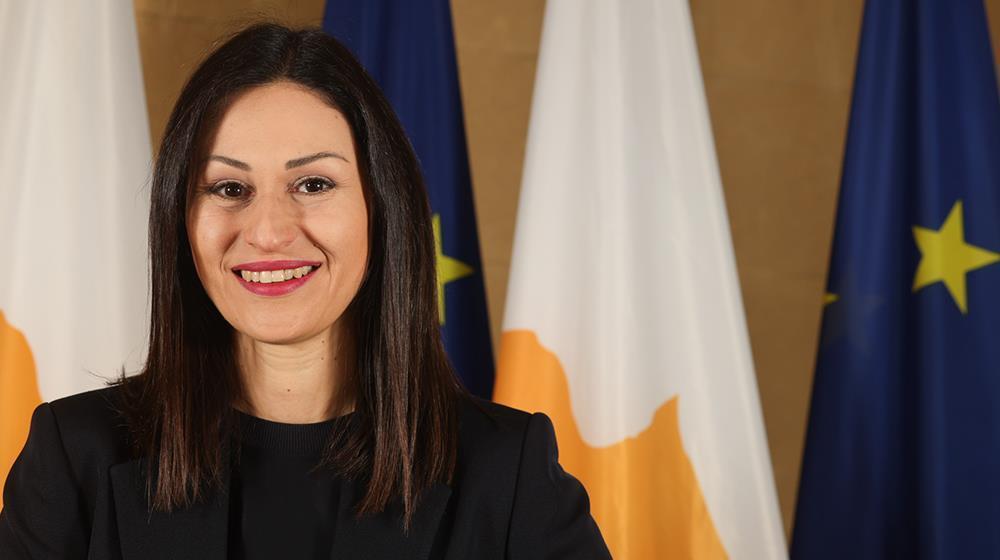
Minister of Agriculture, Rural Development and Environment, Maria Panayiotou has told her EU counterparts about the importance of accelerating circular transition to protect citizens, ecosystems and competitiveness, noting that sustainability and resilience are a collective responsibility.
She was addressing an EU Environment Council in Brussels on 16 December.
The main points on the agenda were the Conclusions on the Circular Economy and Climate Resilience of Europe, and the EU Strategy for the Bioeconomy.
The Council Conclusions, titled "Europe’s Environment – Building a More Circular and Resilient Europe," were approved by the ministers, emphasizing the urgent need for action against climate change, the promotion of the circular economy, and the protection of biodiversity and natural resources.
In her intervention, Panayiotou welcomed the Conclusions as a solid foundation for a common understanding of the EU’s challenges, with respect for different realities and an emphasis on supporting the most vulnerable regions, strengthening resilience, and coordinating sectors. She stressed the importance of accelerating the circular transition to protect citizens, ecosystems, and competitiveness, noting that sustainability and resilience are a collective responsibility.
Subsequently, the "27" exchanged views on the EU Strategy for the Bioeconomy, a key initiative for the transition to a clean and competitive economy and for strengthening the EU’s strategic autonomy by utilizing renewable biological resources from land and sea and reducing dependence on imported fossil fuels.
The Minister welcomed the new Strategy as a significant step toward a greener, competitive, and resilient Europe, while also offering sustainability opportunities in agriculture, fisheries, and waste management. She added that the Strategy provides a solid basis for further discussion and cooperation among Member States.
During the presentation of the work program of the Cypriot Presidency on environmental issues, Panayiotou pointed out that the Presidency will focus on water resilience as a strategic resource within the negotiations on the Climate Change Adaptation Plan.
At the same time, it will promote ambitious actions for climate and the reduction of greenhouse gas emissions, making the transition to a circular economic model a central pillar of the EU’s competitiveness and sustainability. "Our goal is to build a greener, more resilient, and competitive Europe, a Europe that leads globally and delivers tangible results to its citizens," she said.
As part of the Council’s work and preparations for the Cypriot Presidency of the Council of the EU, the Minister held bilateral meetings with the Commissioner for Environment, Jessika Roswall, the German State Secretary of the Federal Ministry for the Environment, Nature Conservation, Nuclear Safety and Consumer Protection, Jochen Flasbarth, and the Irish Minister of State for Nature and Biodiversity, Christopher O’Sullivan.
On Monday, 15 December Panayiotou participated in the European Commission’s event, EU Agri-Food Days, taking part in a high-level panel discussion on the role of the Common Agricultural Policy (CAP) in food security and the competitiveness of the European agri-food sector. Additionally, she attended the traditional meeting of the Green 10, co-organized by the Permanent Representation of Denmark and the European Environment Bureau (EEB), where the Minister presented the work programme of the upcoming Cypriot Presidency.
(Source: CNA)