







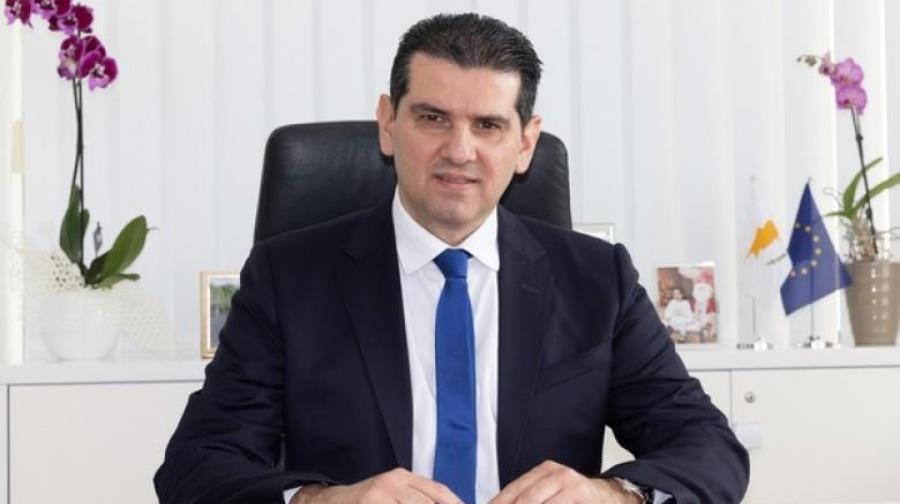
Minister of Health Michalis Damianos participated in the meeting, of the EU Health Council (EPSCO), held on 2 December in Brussels where the main topic of discussion was the Regulation on critical medicines.
Damianos told the Council that Cyprus remains committed to strengthening the EU’s security of supply and ensuring equitable access to medicines for all patients in the European Union.
In his remarks upon arrival at the Council, the Minister thanked the Danish Presidency for its intensive work over the past six months. “During the Cypriot Presidency, we will build on the momentum that has been created in order to finalise the remaining elements of the relevant legislative packages,” he said.
“The COVID-19 pandemic has demonstrated that when there is coordination and strategy, a great deal can be achieved. And, of course, our ultimate goal is to ensure that health belongs to everyone, regardless of who they are and where they live,” he further noted.
The ministers of the 27 Member States endorsed the Council’s negotiating position on the Regulation concerning critical medicines. In his intervention during the public session, Damianos welcomed the progress achieved by the Danish Presidency, emphasising that Cyprus remains committed to strengthening the EU’s security of supply and ensuring equitable access to medicines for all patients in the European Union. He also underlined that the upcoming Cypriot Presidency is ready to begin negotiations with the European Parliament with the aim of reaching a political agreement.
In his official statement on the file, the Minister stressed that “we express our sincere appreciation to the Danish Presidency for its tireless efforts on this particularly complex file. Its inclusive and solution-oriented approach allowed us to reach a compromise that reflects the priorities and concerns of all Member States.”
He also thanked his counterparts for their warm wishes ahead of the Cypriot Presidency, adding that “Cyprus is ready to endorse the compromise texts and support the adoption of the general approach. We believe that the text before us provides a balanced way forward, enhancing the Union’s security of supply and ensuring fair access to medicines for all EU citizens, while at the same time strengthening the resilience of the European pharmaceutical ecosystem.”
The Minister highlighted that the goal of the Presidency will be “to achieve an outcome that strengthens the resilience of the Union’s pharmaceutical sector, while remaining workable for all Member States.”
Referring to the implementation of the Wastewater Treatment Directive and the introduction of Extended Producer Responsibility (EPR) for the removal of micropollutants, the Minister stated: “We recognise the importance of implementing the Directive. However, its application should not unintentionally affect the availability, pricing or affordability of medicines, especially in small and vulnerable markets.”
He stressed that “the 2022 impact assessment indicated minimal costs for producers, but the current conditions — including high production costs, stressed supply chains and low margins for generics — create increased risks. Even small additional charges could lead to product withdrawals, particularly in small markets.”
Furthermore, he noted that “dependence on imports further exacerbates these concerns, while our domestic manufacturers supply critical medicines,” adding that “an updated Commission study is essential, as well as EPR systems that are proportionate and fair, protecting both environmental objectives and the resilience of the pharmaceutical supply chain.”
On the sidelines of the Council, the Minister met with the Commissioner for Health and Food Safety, Olivér Várhelyi, with the Director-General for Health and Food Safety, Sandra Gallina, as well as with the German Minister of Health, Nina Warken. He is also expected to meet with the Chair of the European Parliament’s Committee on Public Health, Jarubas Adam Sebastian, and other members of the SANT Committee.
(Source: CNA)
